MAT 142: PreCalculus with Limits
August 31, 2026
What Are We Here For?
Primarily, we’re here to prepare for you all to successfully complete Calculus I next semester.
In order to do that, we’ll…
- Build a strong algebra foundation
- Examine many different function classes
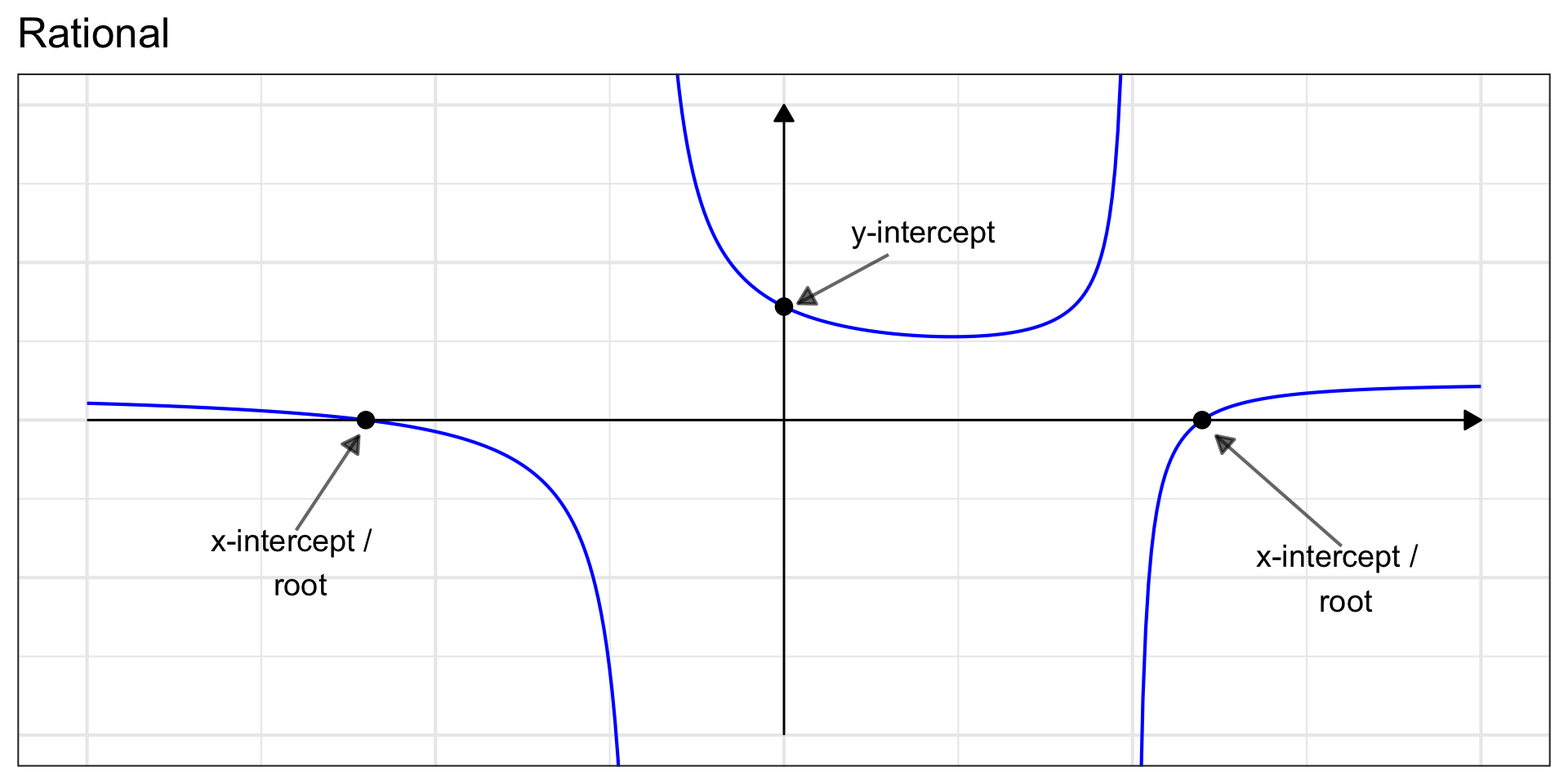
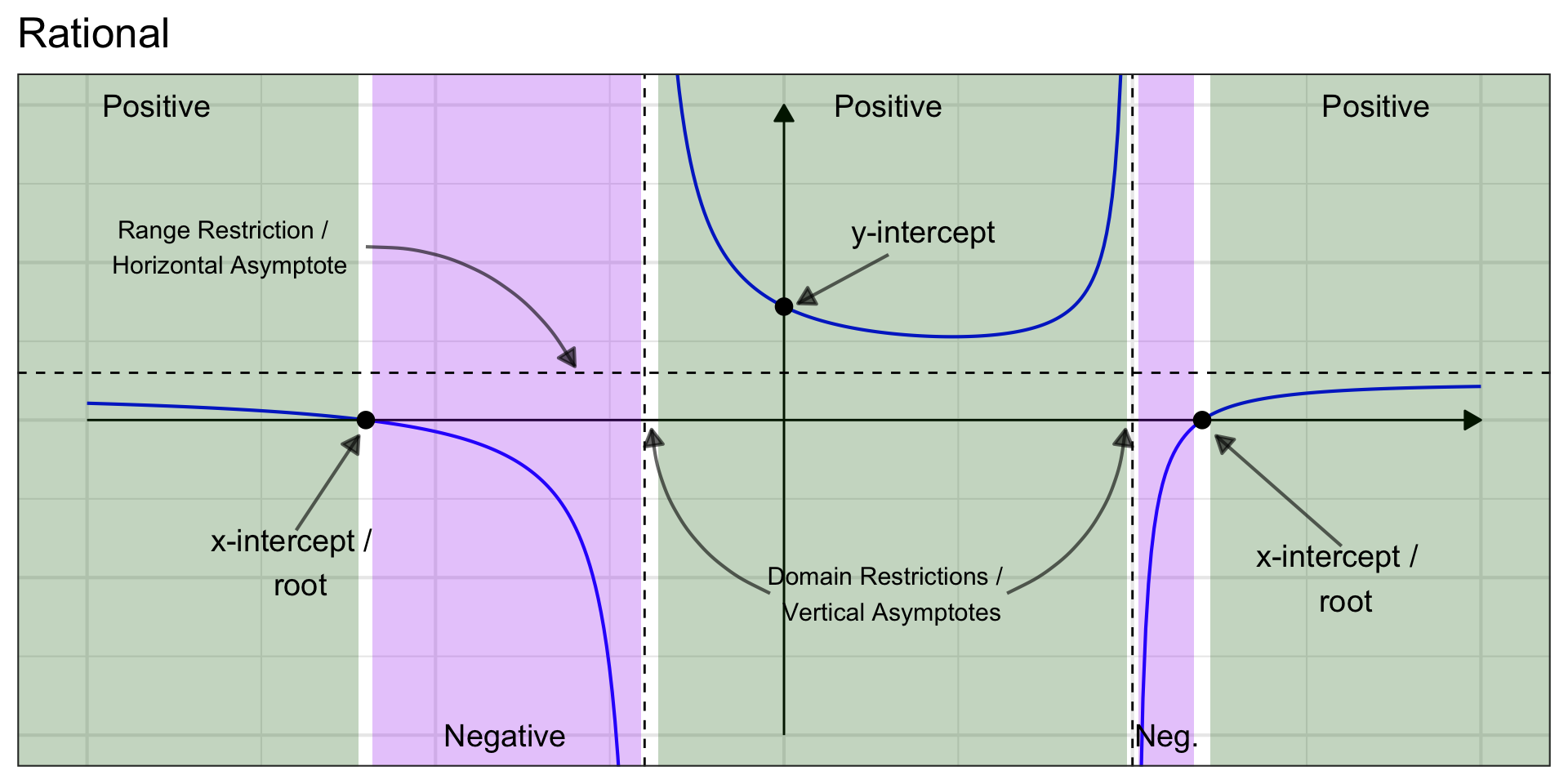
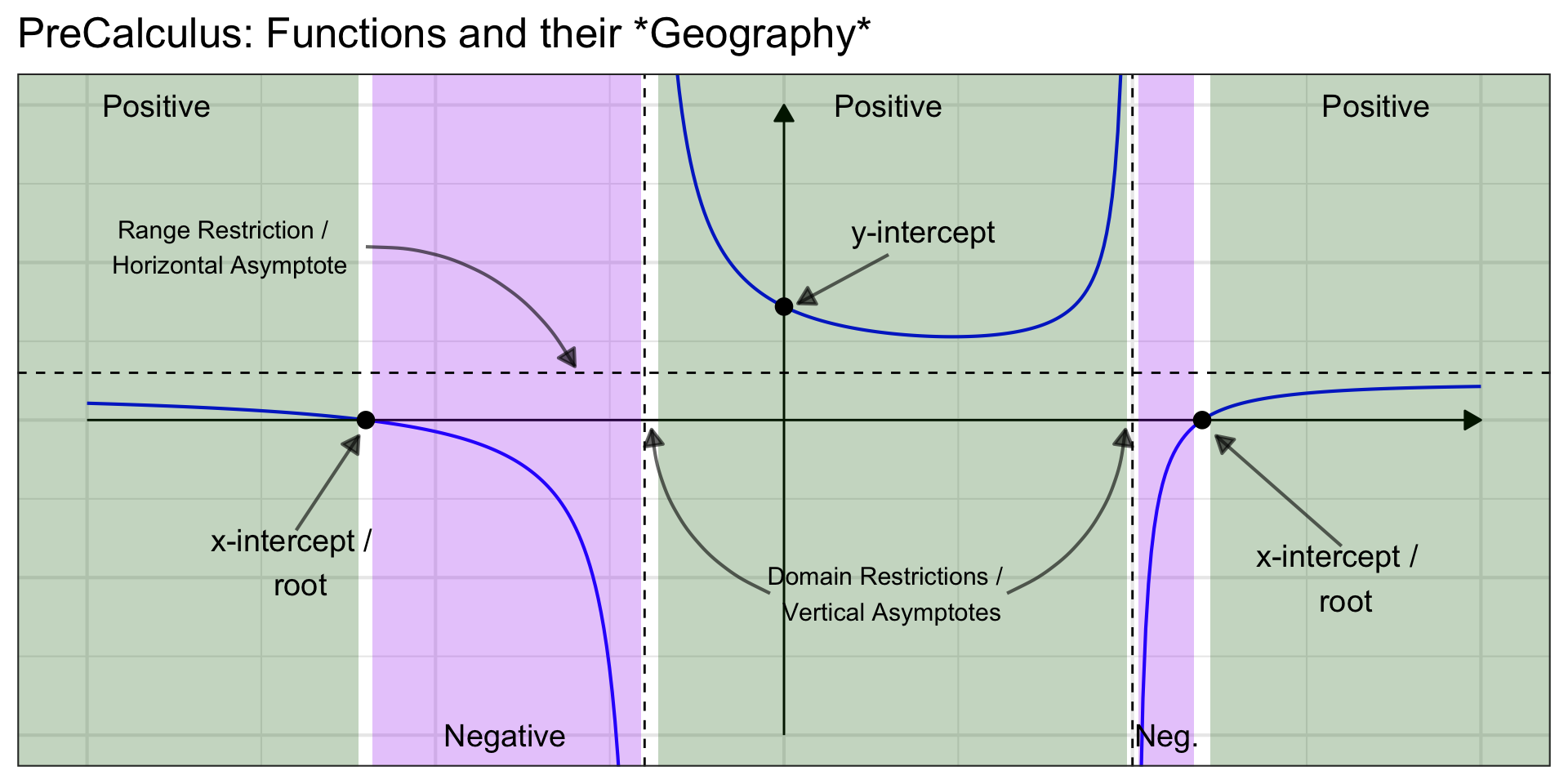
- Explore function geography
- Domains
- Ranges
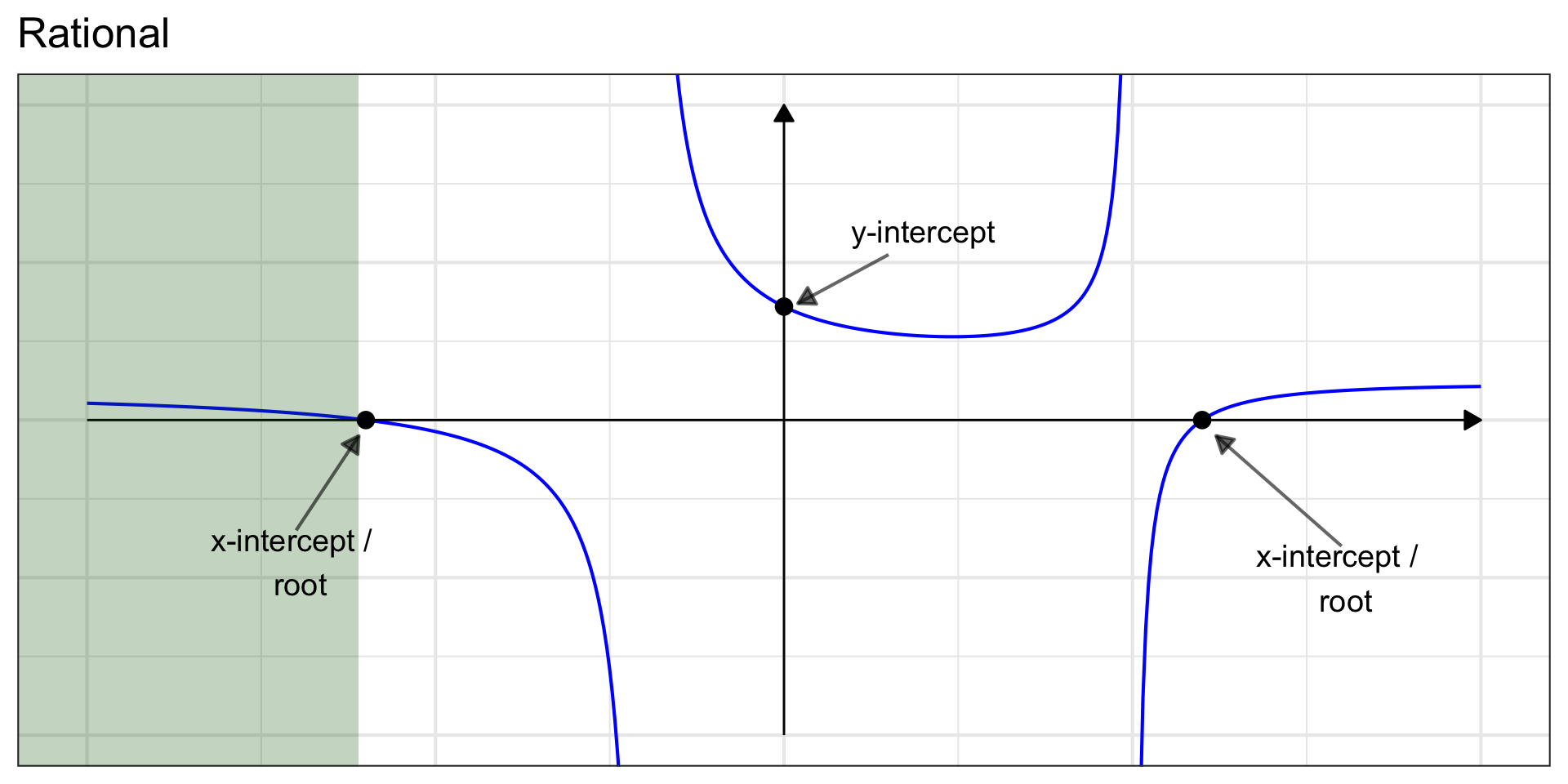
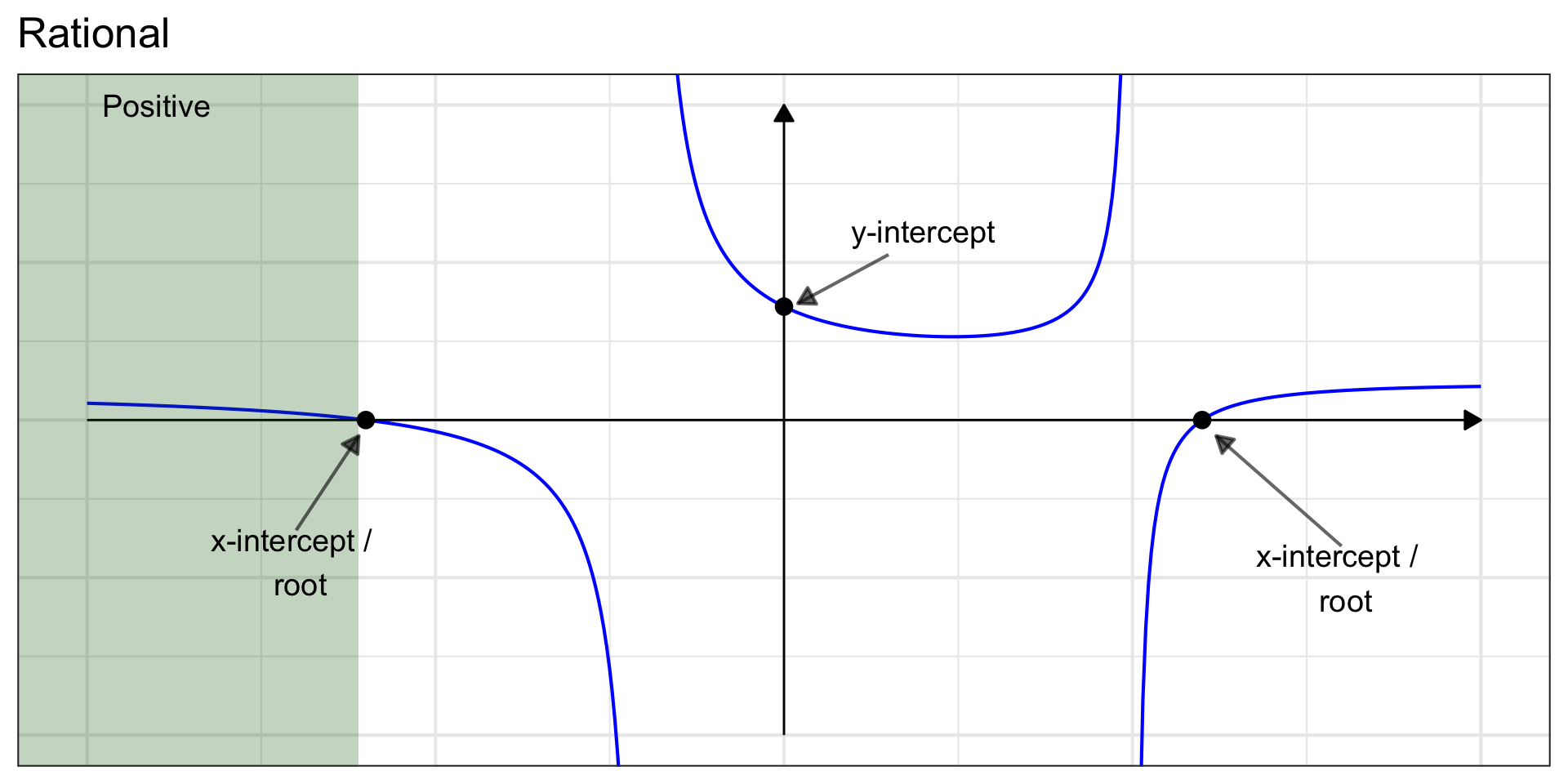
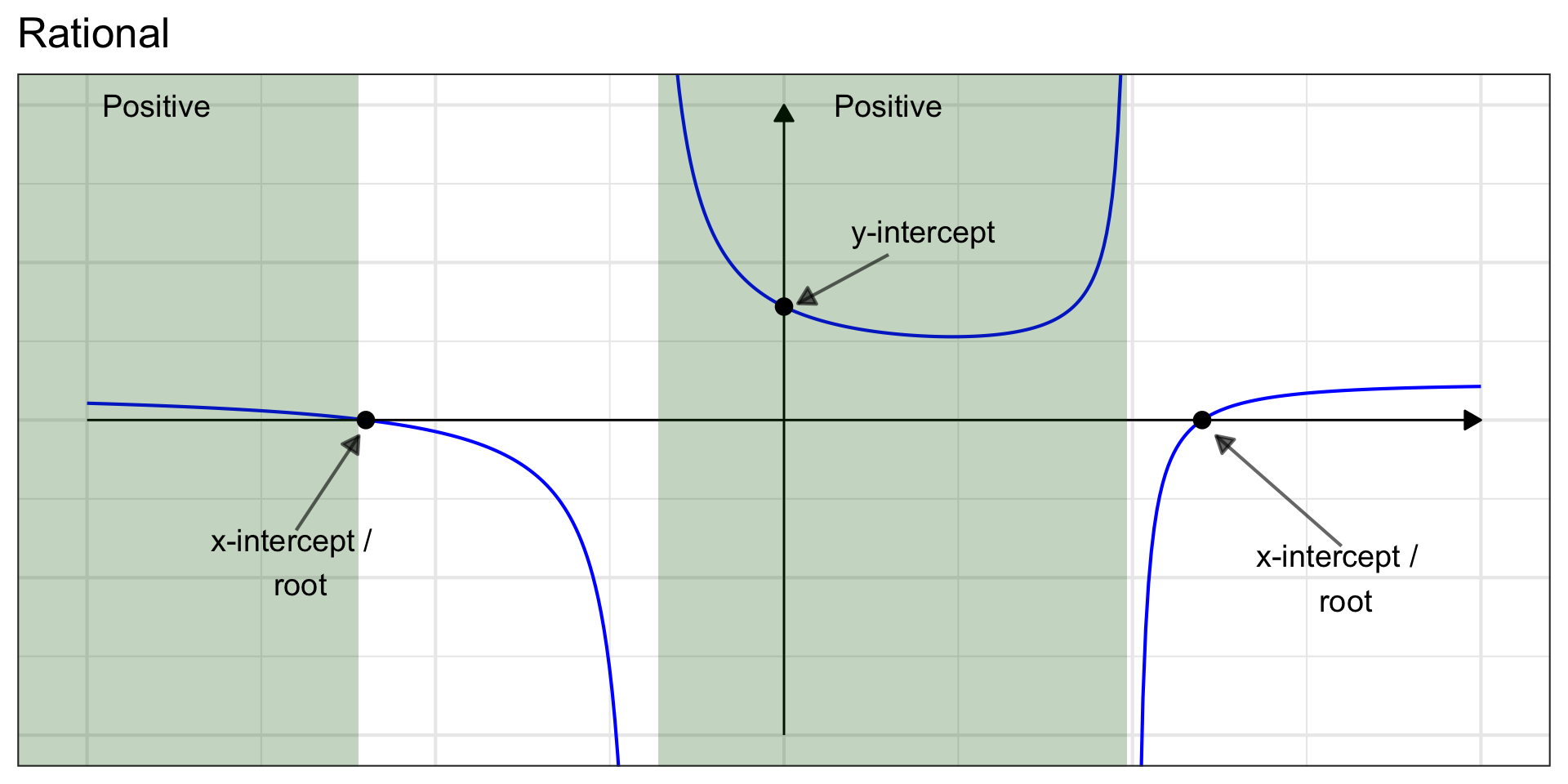
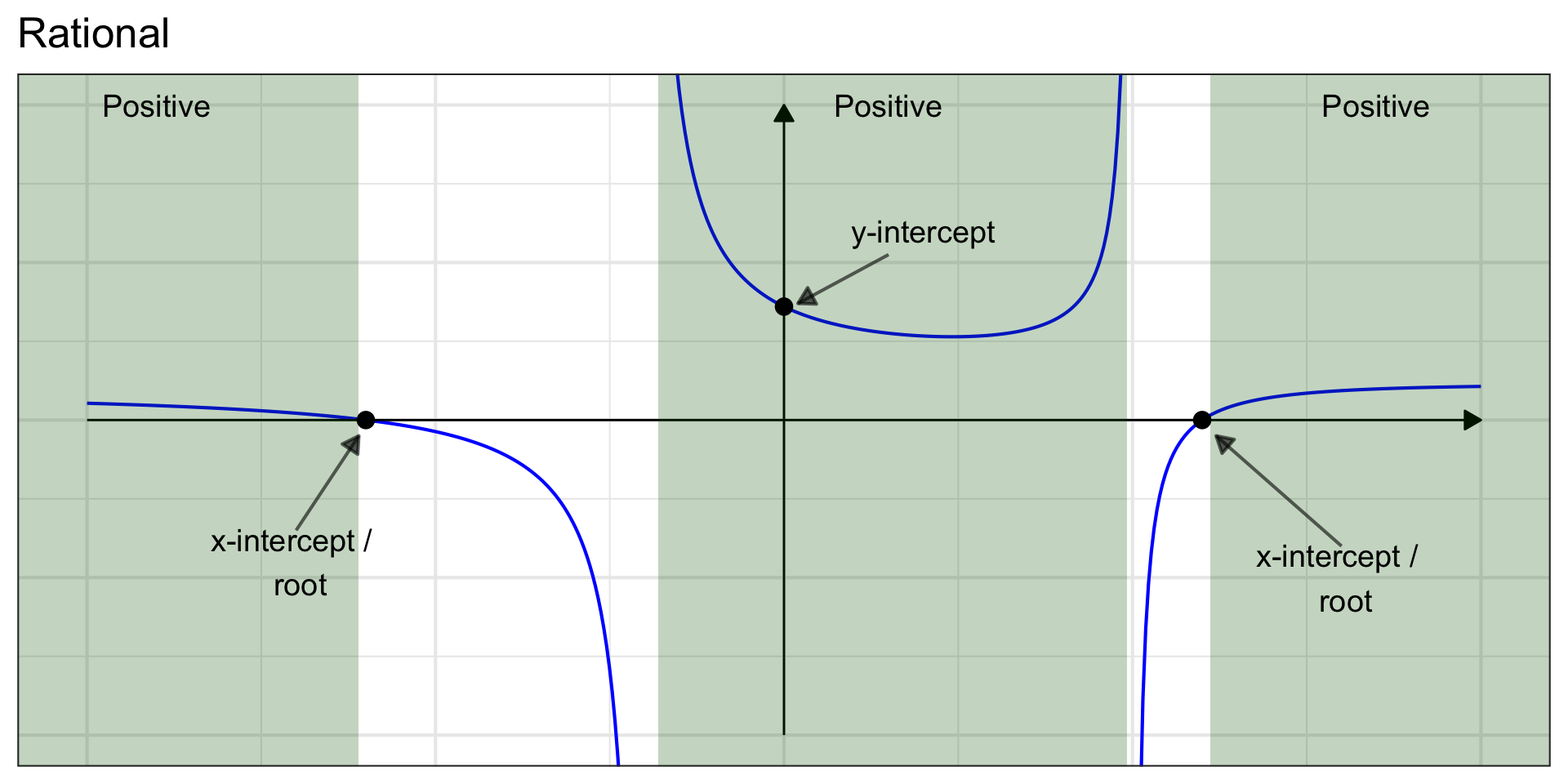
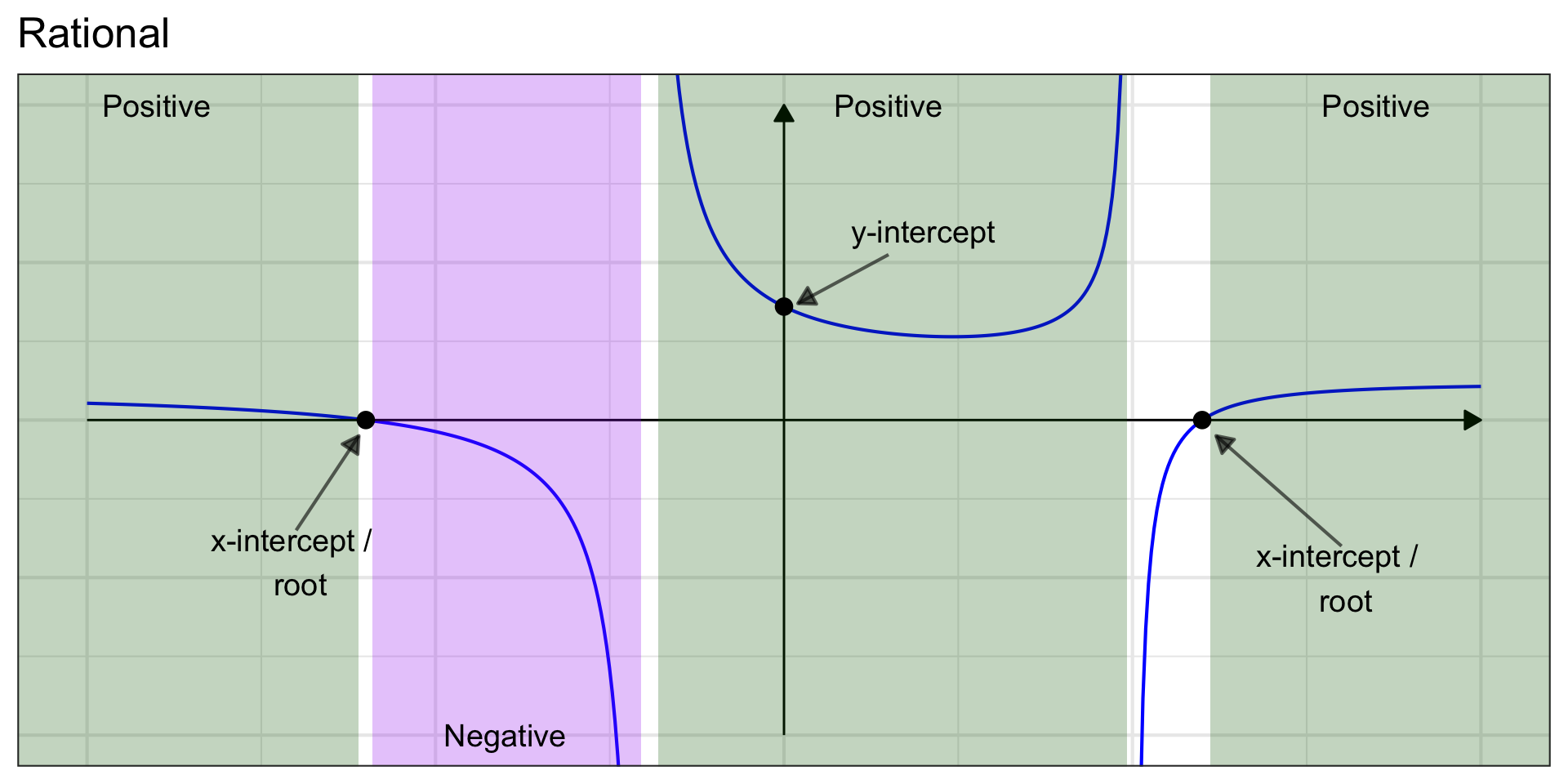
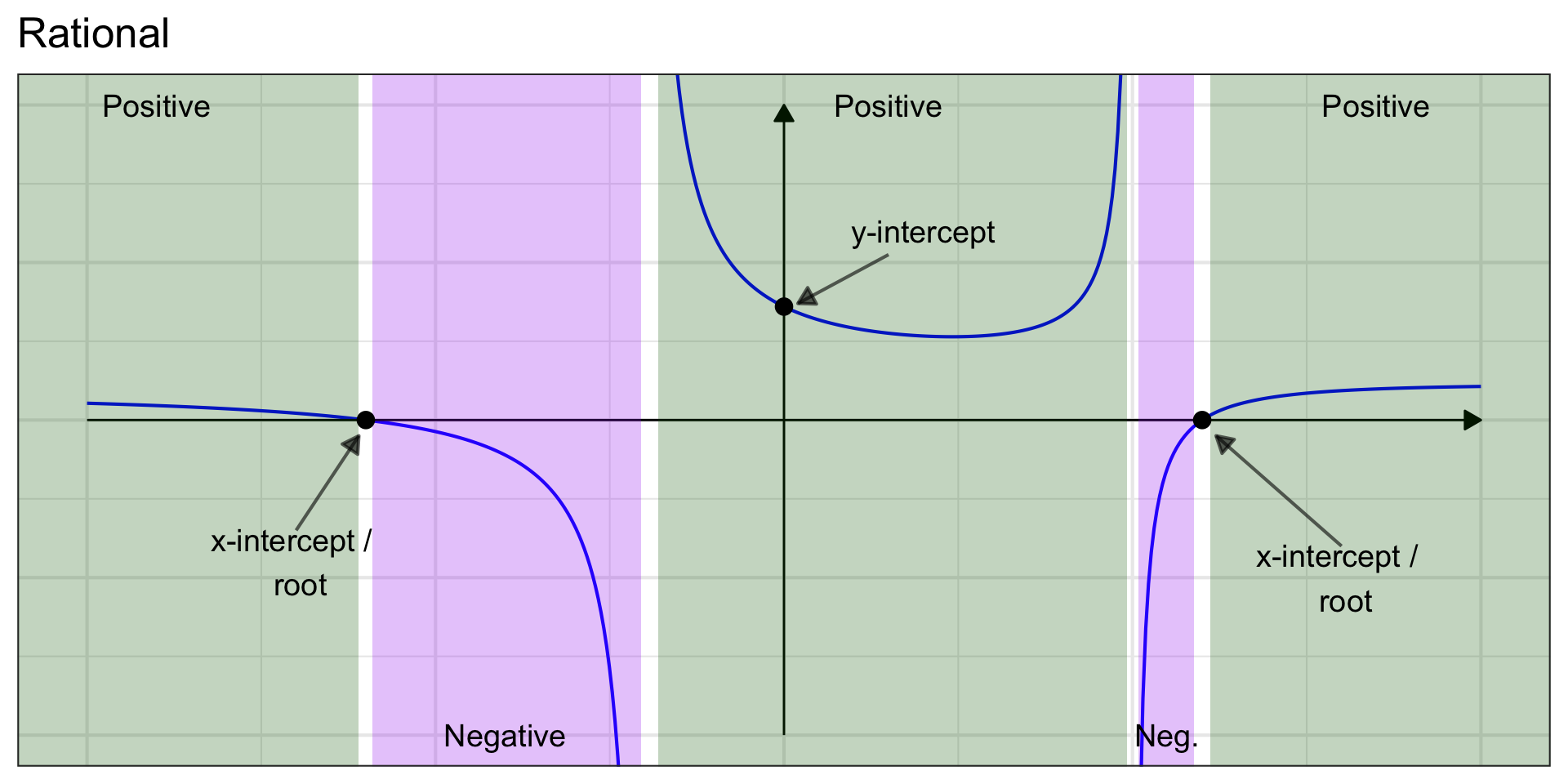
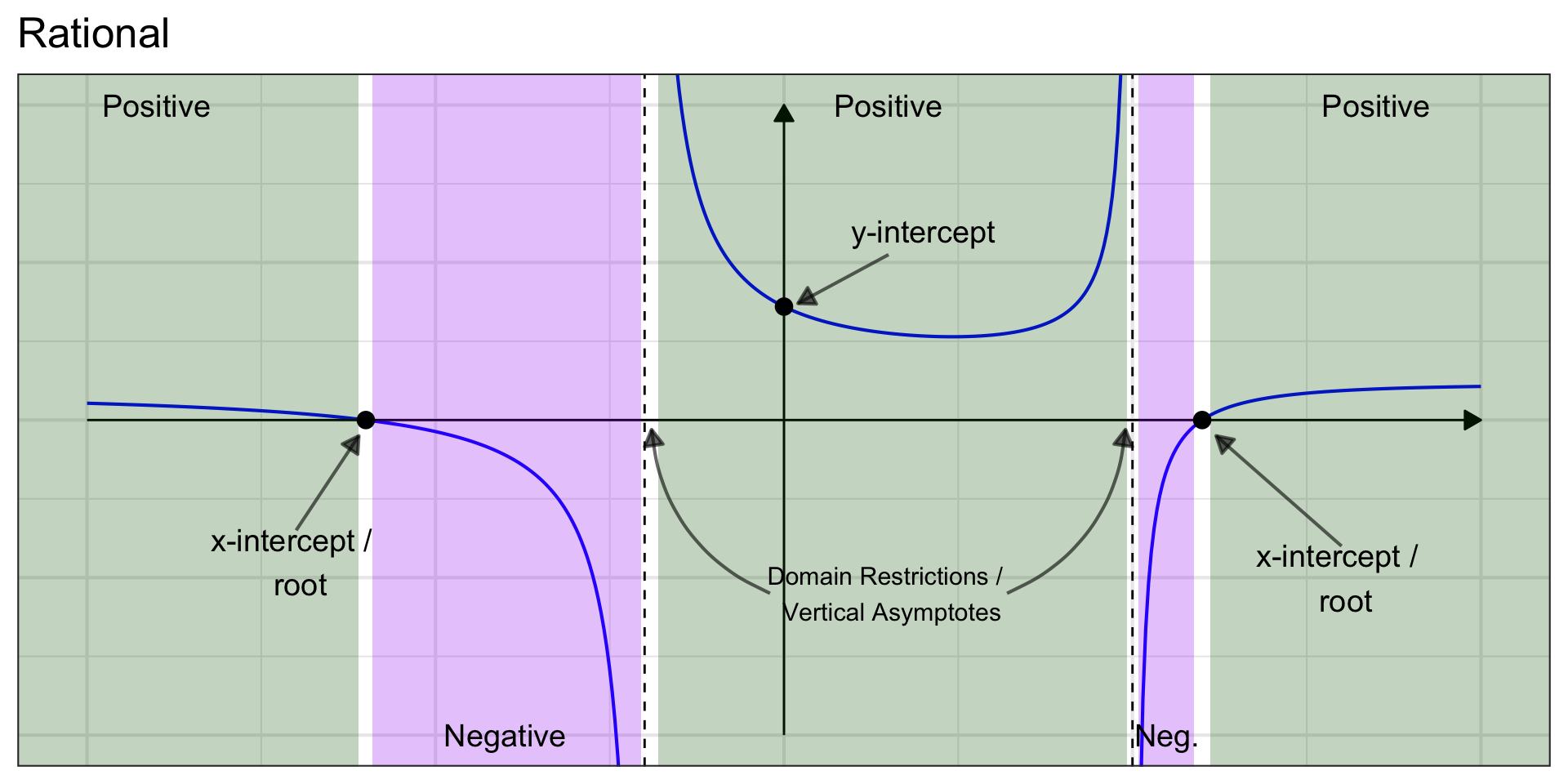
- Positivity/Negativity
- Roots
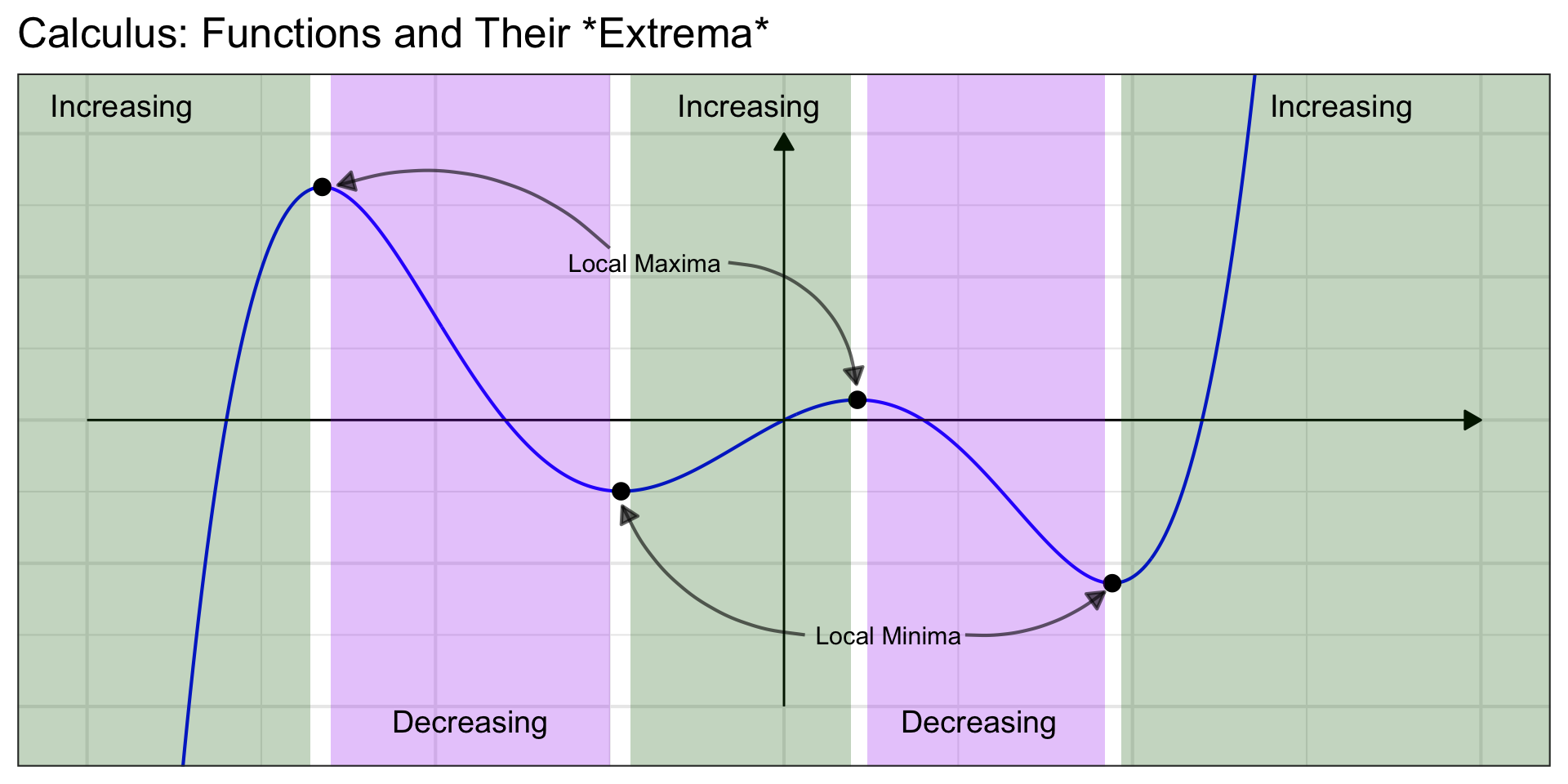
- Increasing/Decreasing behaviors
- Asymptotes
- Develop the notion of invertibility, construct inverse functions, and apply inverses
What Are We Here For?
We’ll start shoring up that algebra foundation later today, but we’ll start with a preview and course overview first.
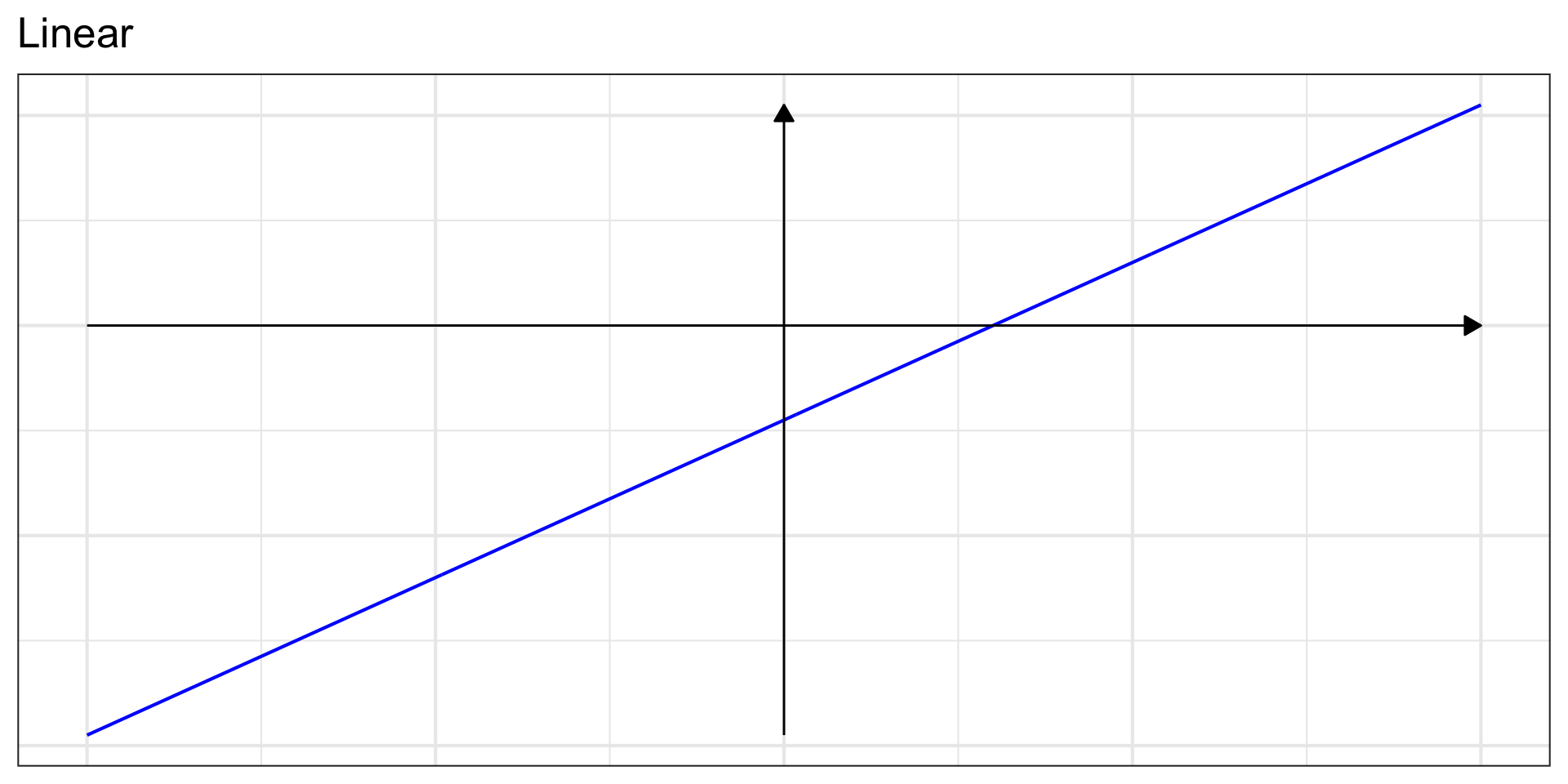
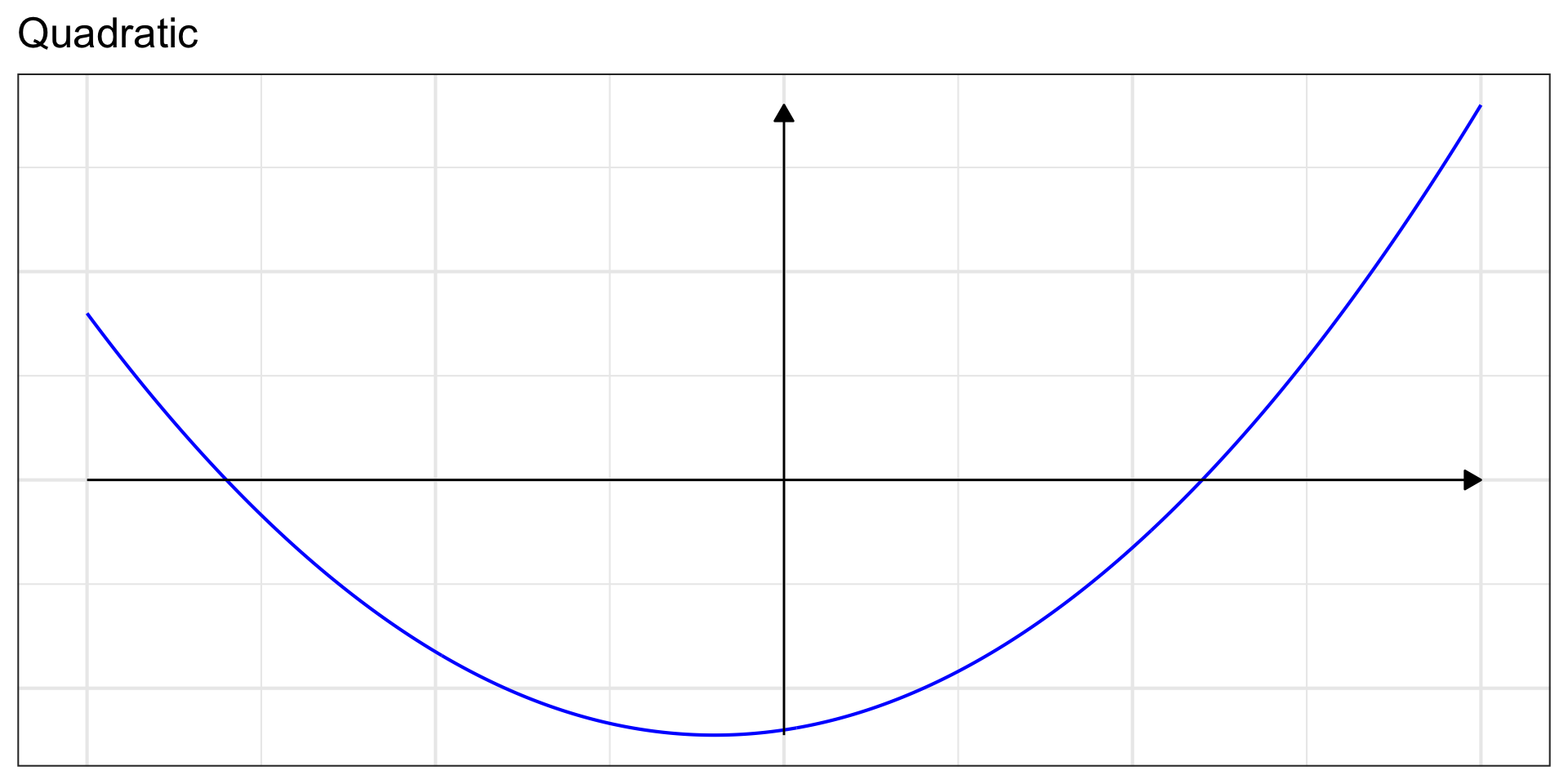
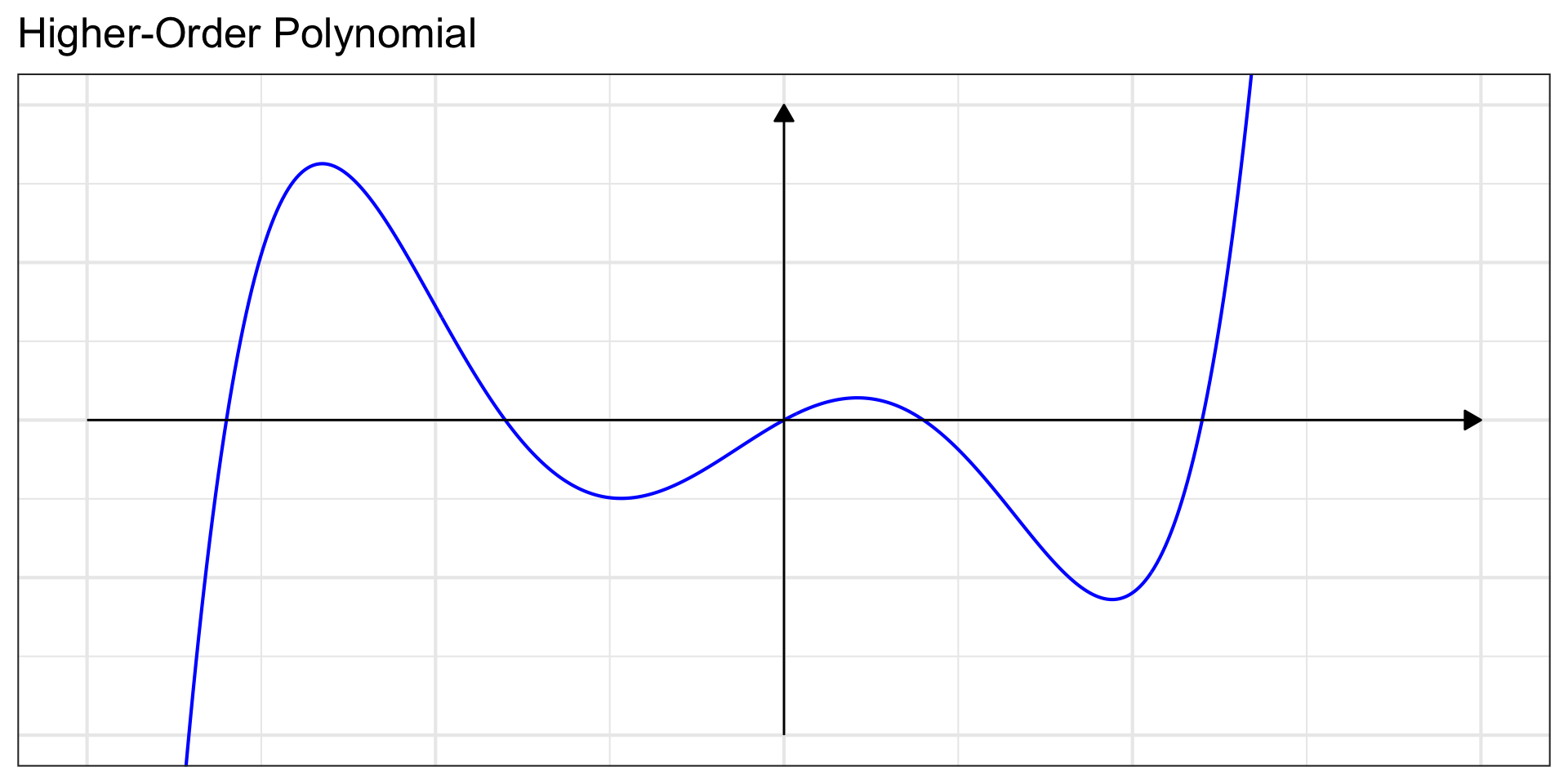
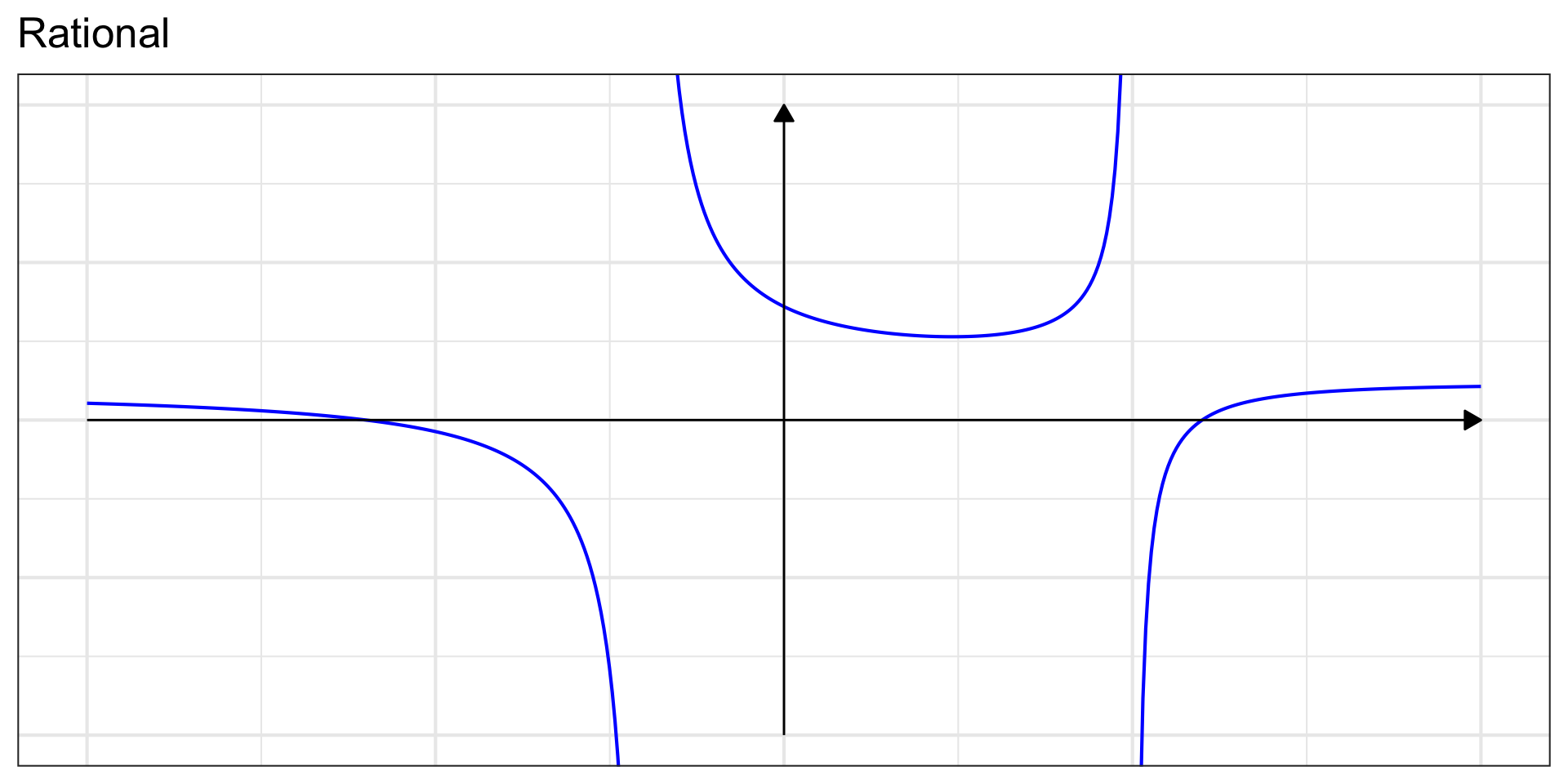
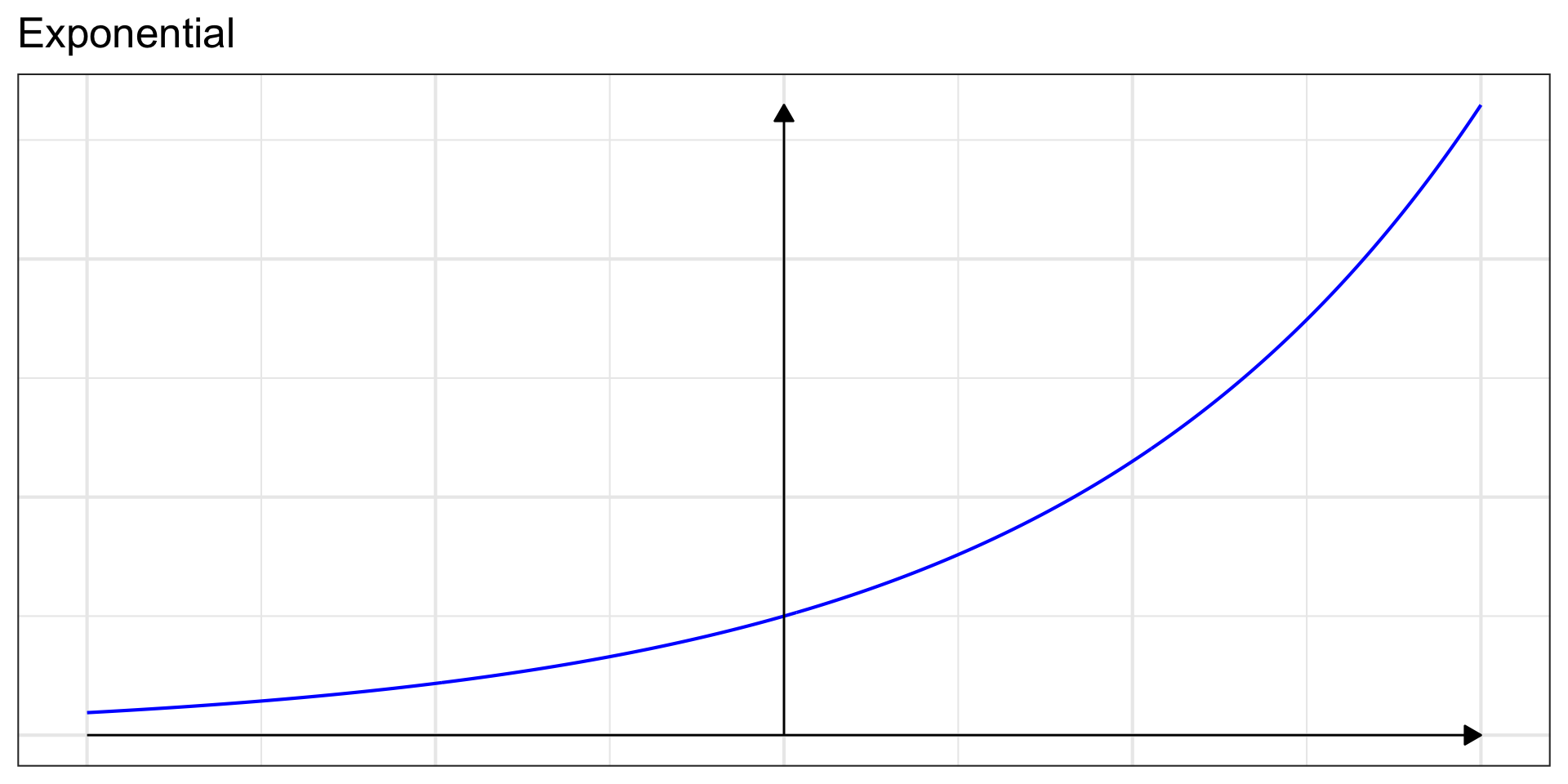
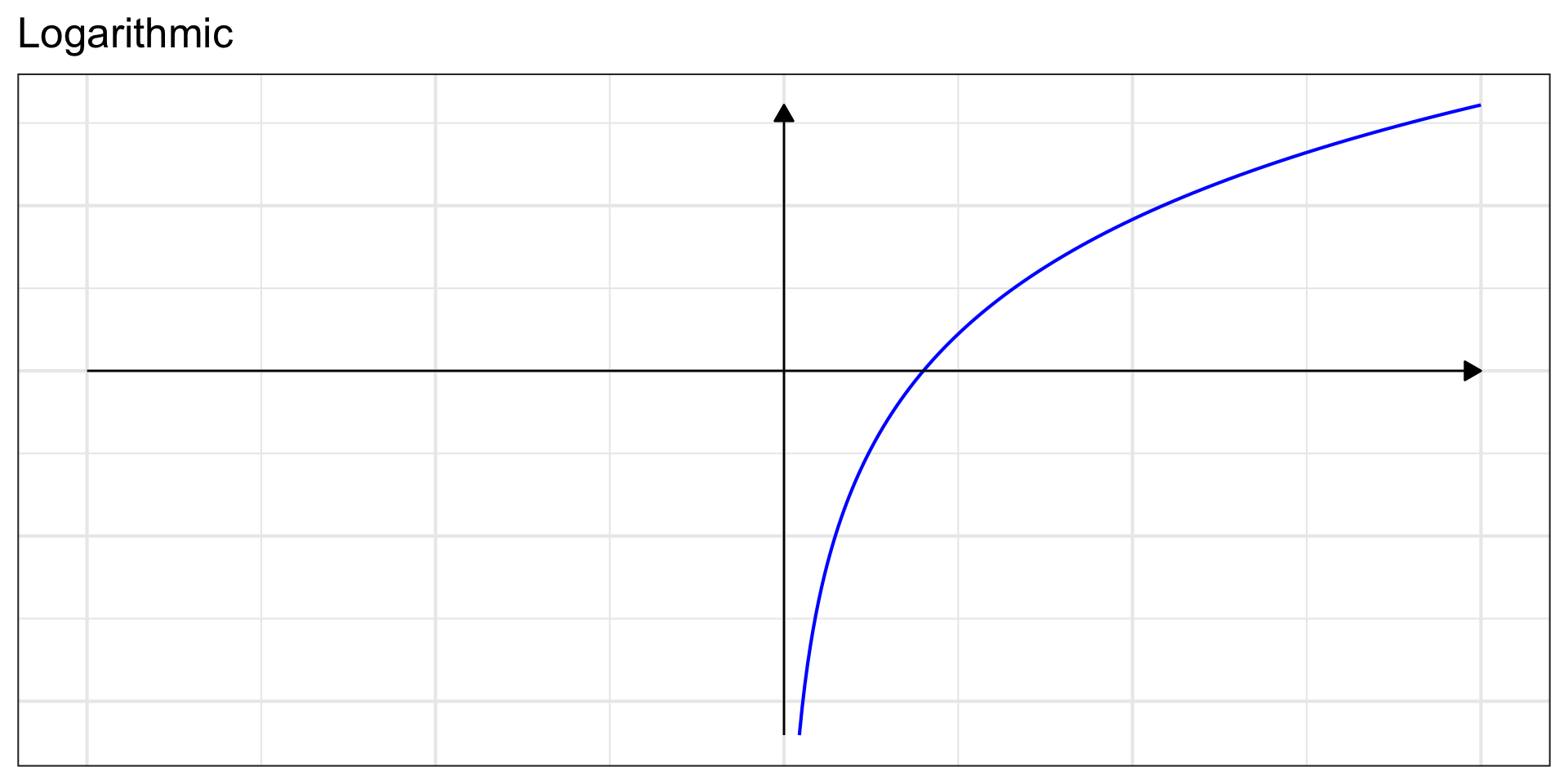
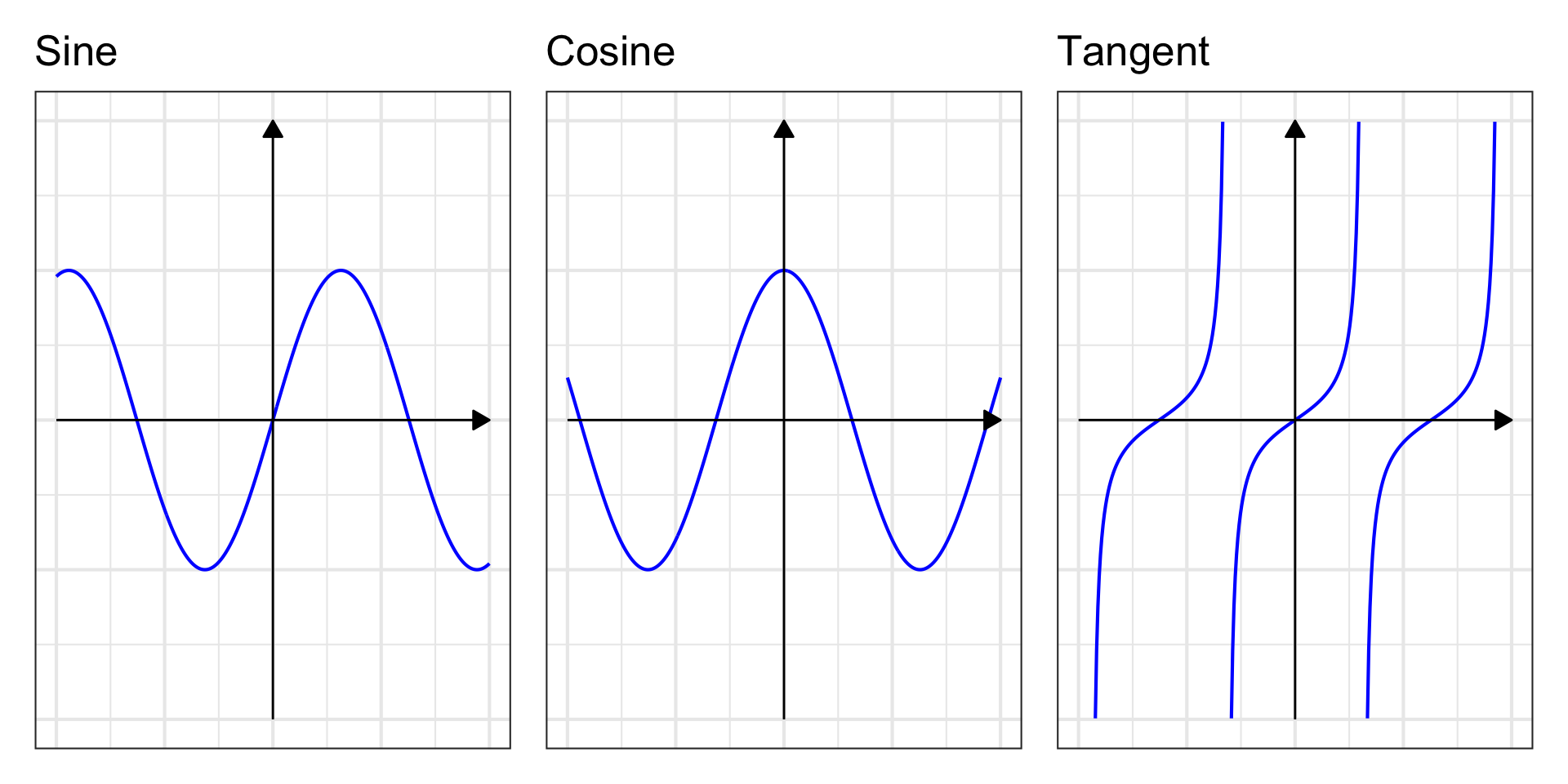
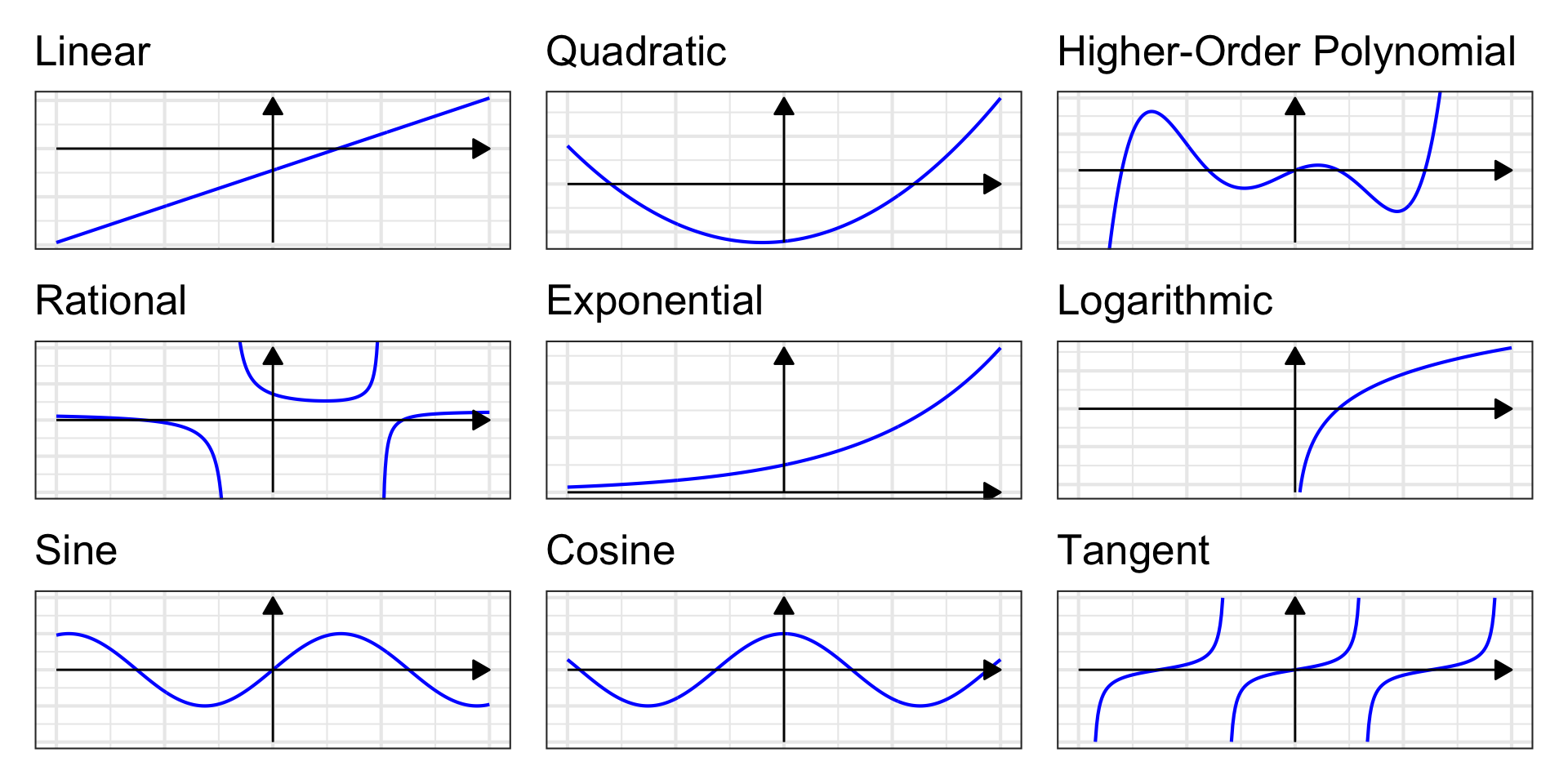
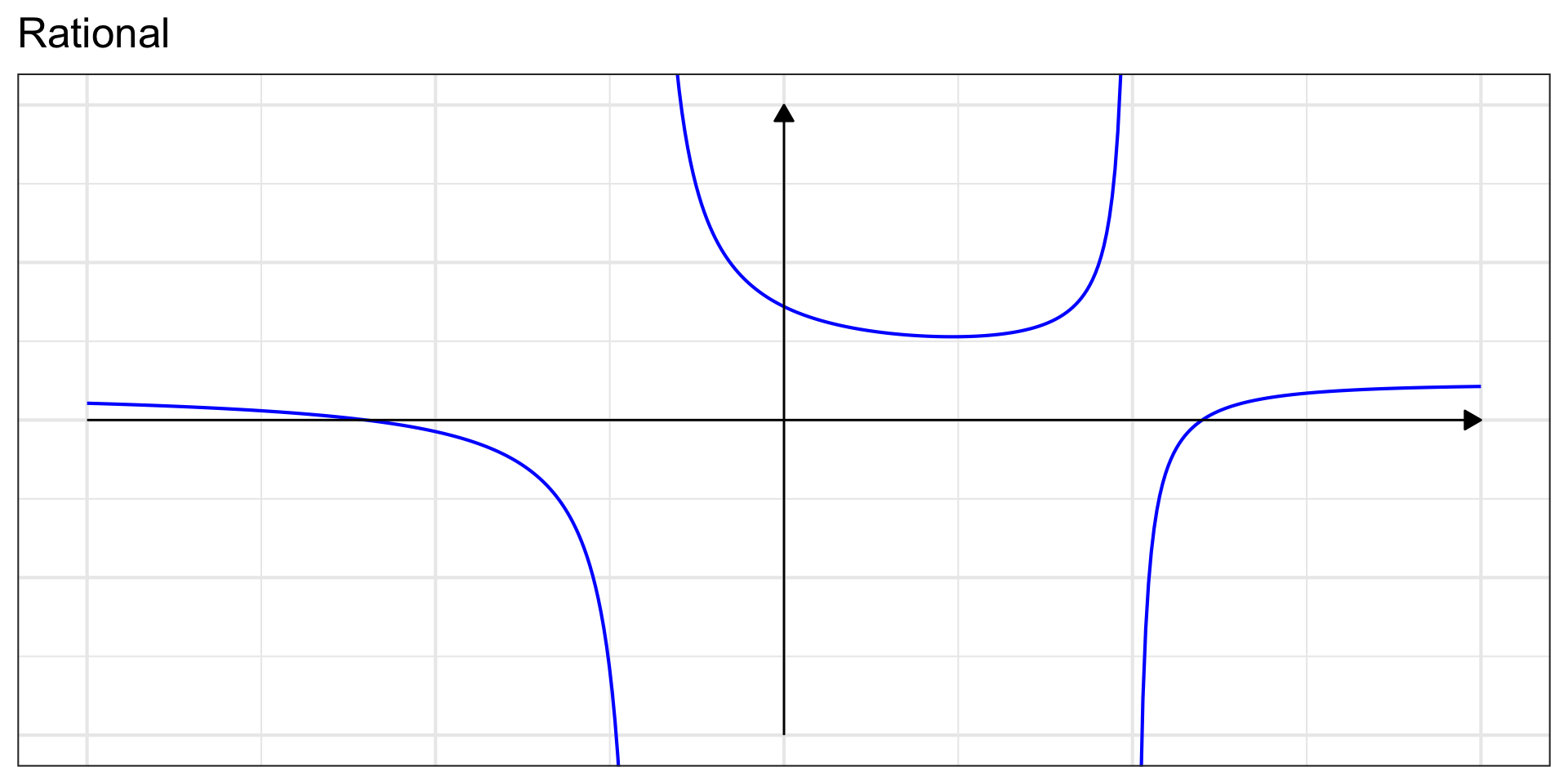
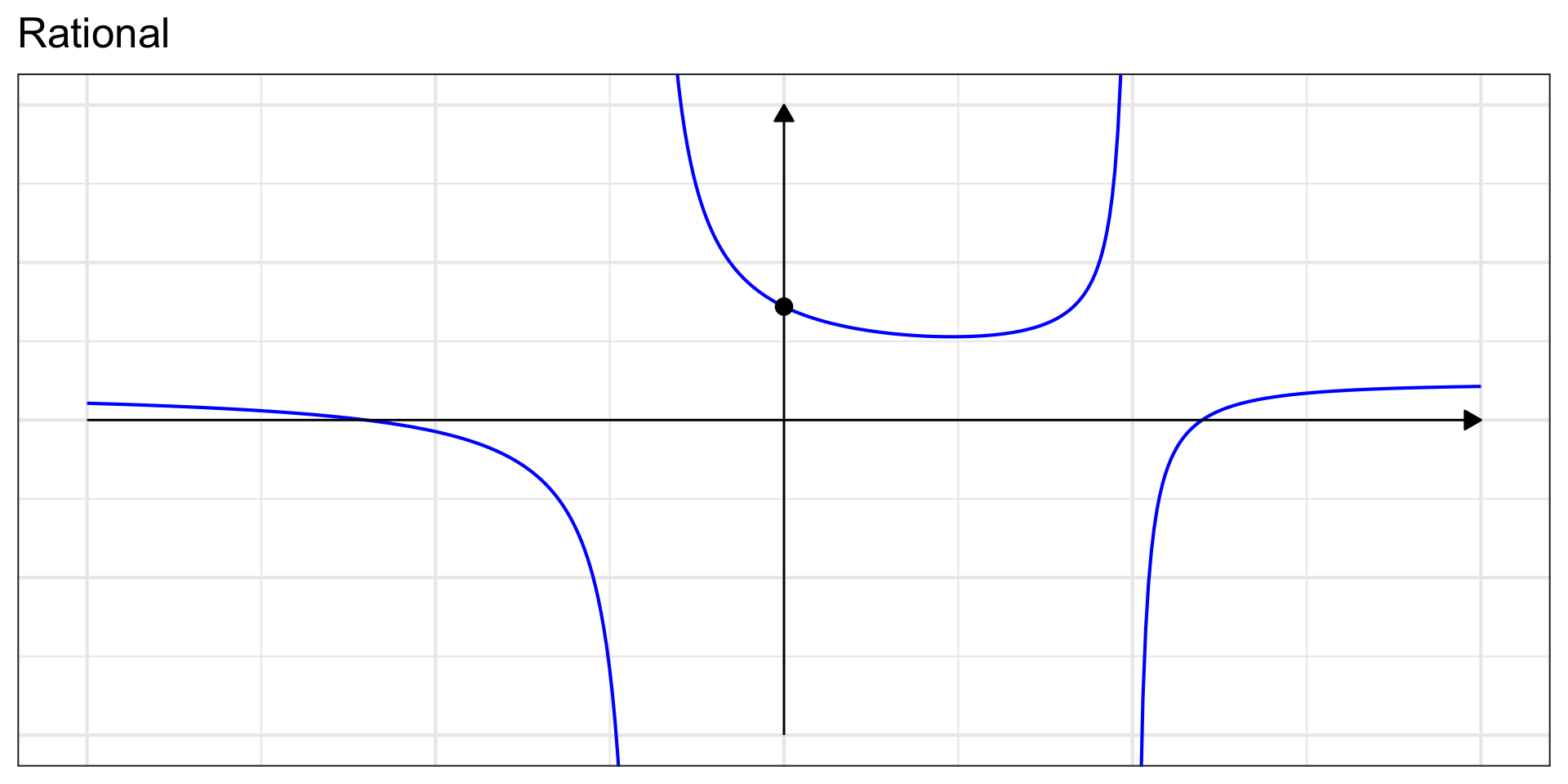
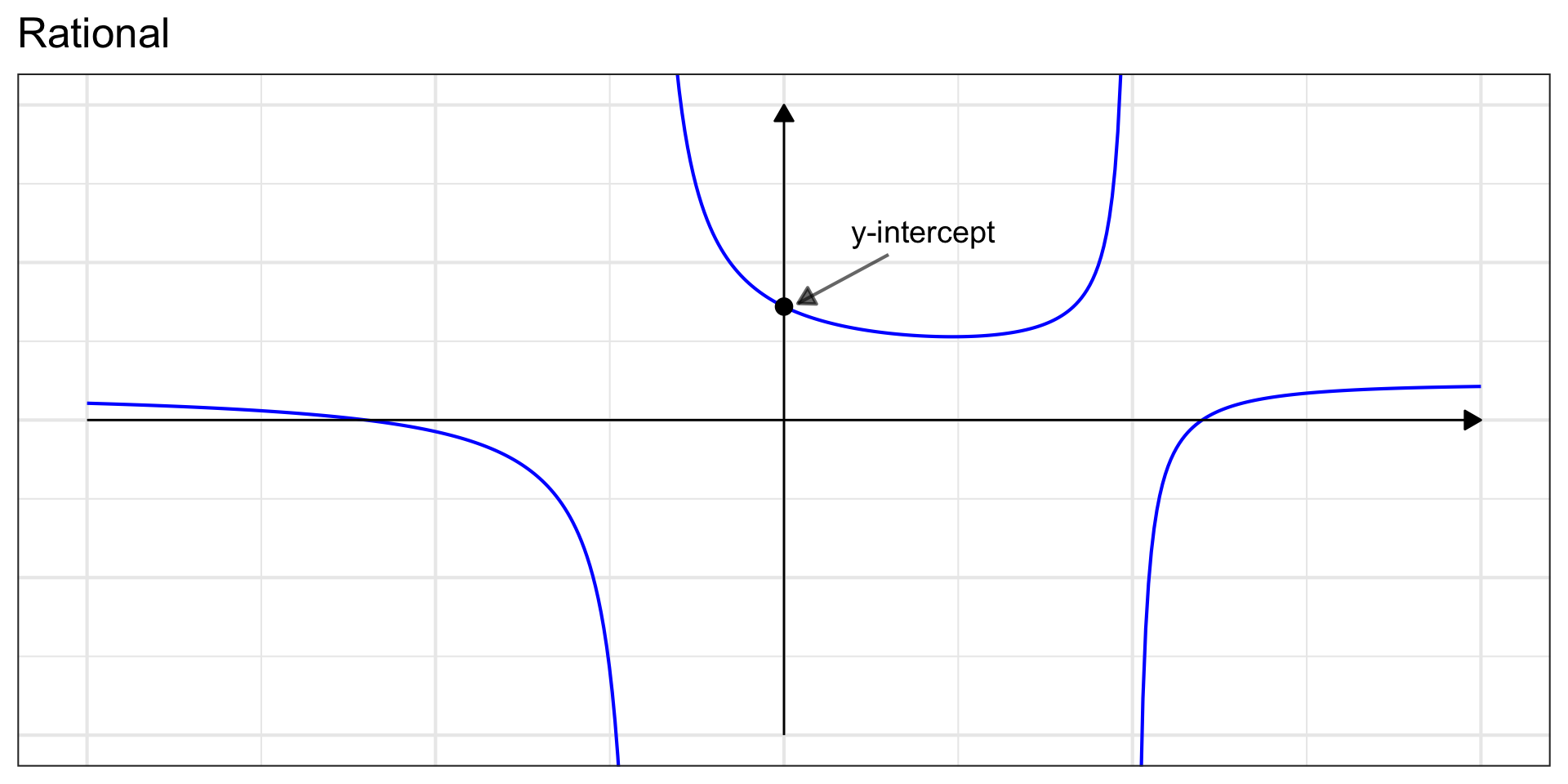
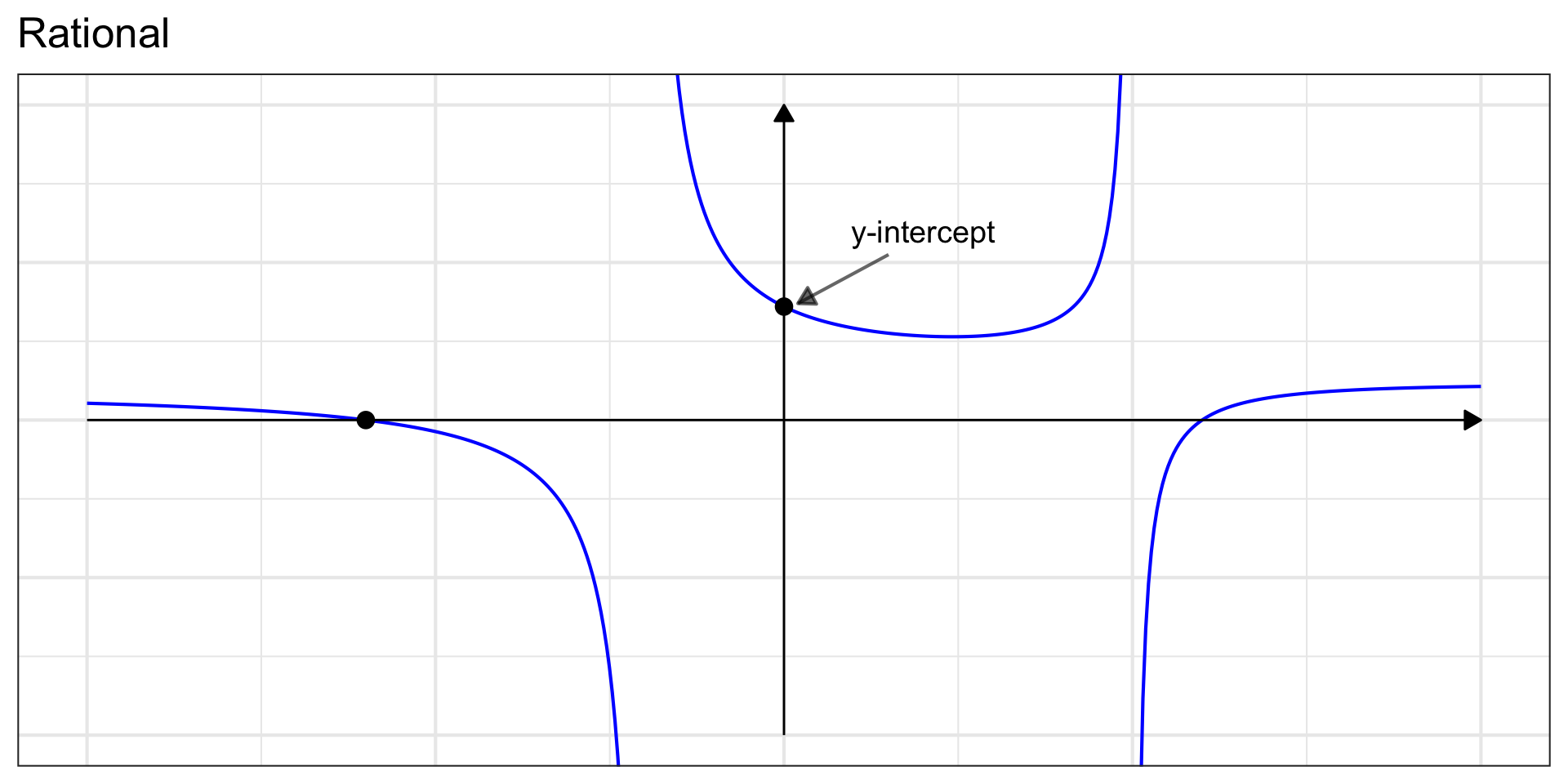
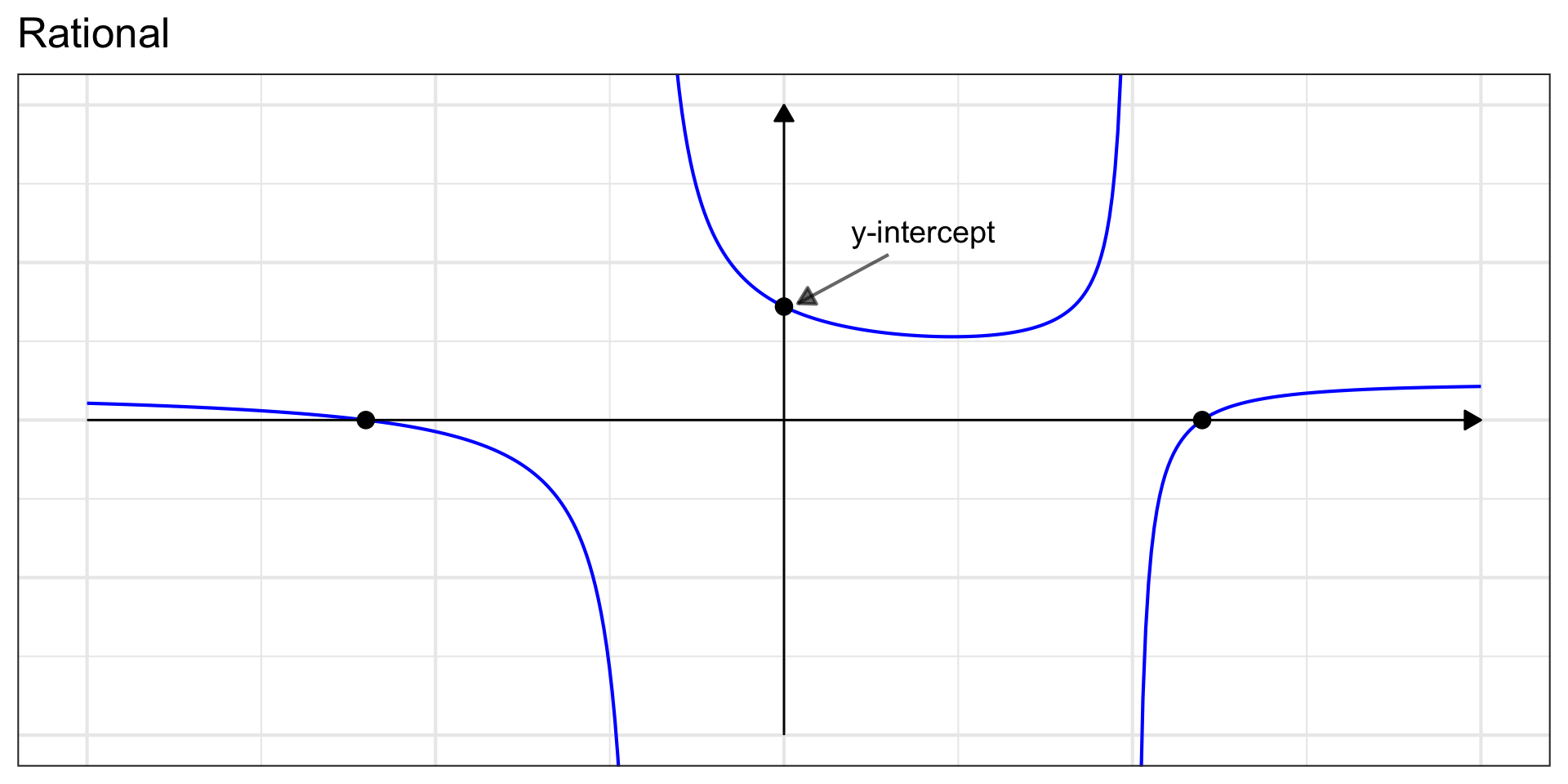
First, the function families we’ll encounter…
What Are We Here For?
We’ll start shoring up that algebra foundation later today, but we’ll start with a preview and course overview first.
First, the function families we’ll encounter…
![]()
What Are We Here For?
We’ll start shoring up that algebra foundation later today, but we’ll start with a preview and course overview first.
First, the function families we’ll encounter…
![]()
What Are We Here For?
We’ll start shoring up that algebra foundation later today, but we’ll start with a preview and course overview first.
First, the function families we’ll encounter…
![]()
What Are We Here For?
We’ll start shoring up that algebra foundation later today, but we’ll start with a preview and course overview first.
First, the function families we’ll encounter…
![]()
What Are We Here For?
We’ll start shoring up that algebra foundation later today, but we’ll start with a preview and course overview first.
First, the function families we’ll encounter…
![]()
What Are We Here For?
We’ll start shoring up that algebra foundation later today, but we’ll start with a preview and course overview first.
First, the function families we’ll encounter…
![]()
What Are We Here For?
We’ll start shoring up that algebra foundation later today, but we’ll start with a preview and course overview first.
First, the function families we’ll encounter…
![]()
What Are We Here For?
We’ll take a look at those function geography items, but first we’ll motivate their importance by a preview of your goals in calculus.
What Are We Here For?
We’ll take a look at those function geography items, but first we’ll motivate their importance by a preview of your goals in calculus.
![]()
What Are We Here For?
We’ll take a look at those function geography items, but first we’ll motivate their importance by a preview of your goals in calculus.
![]()
What Are We Here For?
We’ll take a look at those function geography items, but first we’ll motivate their importance by a preview of your goals in calculus.
![]()
What Are We Here For?
We’ll take a look at those function geography items, but first we’ll motivate their importance by a preview of your goals in calculus.
![]()
What Are We Here For?
We’ll take a look at those function geography items, but first we’ll motivate their importance by a preview of your goals in calculus.
![]()
What Are We Here For?
We’ll take a look at those function geography items, but first we’ll motivate their importance by a preview of your goals in calculus.
![]()
What Are We Here For?
We’ll take a look at those function geography items, but first we’ll motivate their importance by a preview of your goals in calculus.
![]()
What Are We Here For?
We’ll take a look at those function geography items, but first we’ll motivate their importance by a preview of your goals in calculus.
![]()
What Are We Here For?
We’ll take a look at those function geography items, but first we’ll motivate their importance by a preview of your goals in calculus.
![]()
What Are We Here For?
We’ll take a look at those function geography items, but first we’ll motivate their importance by a preview of your goals in calculus.
![]()
What Are We Here For?
We’ll take a look at those function geography items, but first we’ll motivate their importance by a preview of your goals in calculus.
![]()
What Are We Here For?
We’ll take a look at those function geography items, but first we’ll motivate their importance by a preview of your goals in calculus.
![]()
What Are We Here For?
We’ll take a look at those function geography items, but first we’ll motivate their importance by a preview of your goals in calculus.
![]()
What Are We Here For?
We’ll take a look at those function geography items, but first we’ll motivate their importance by a preview of your goals in calculus.
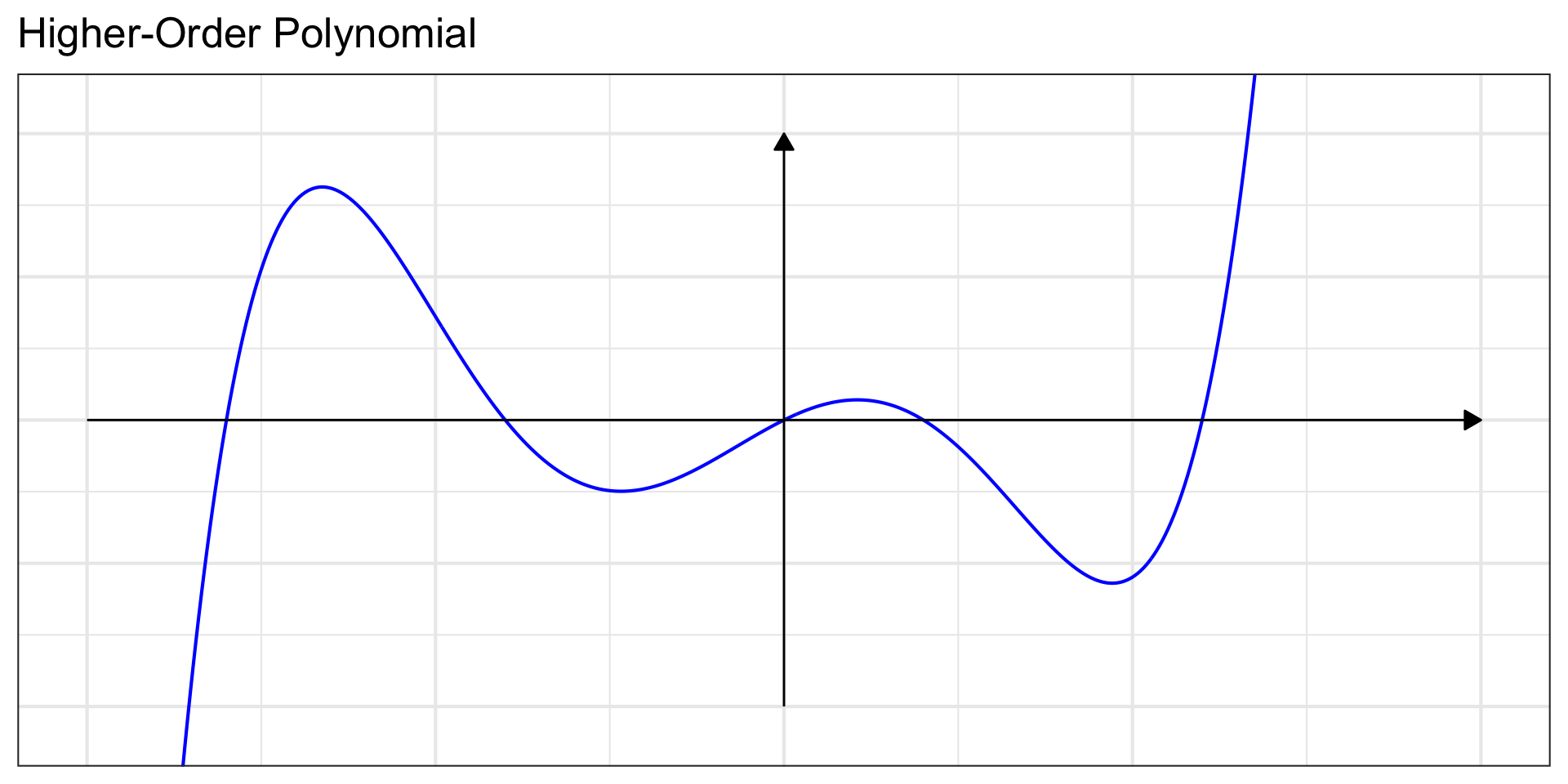
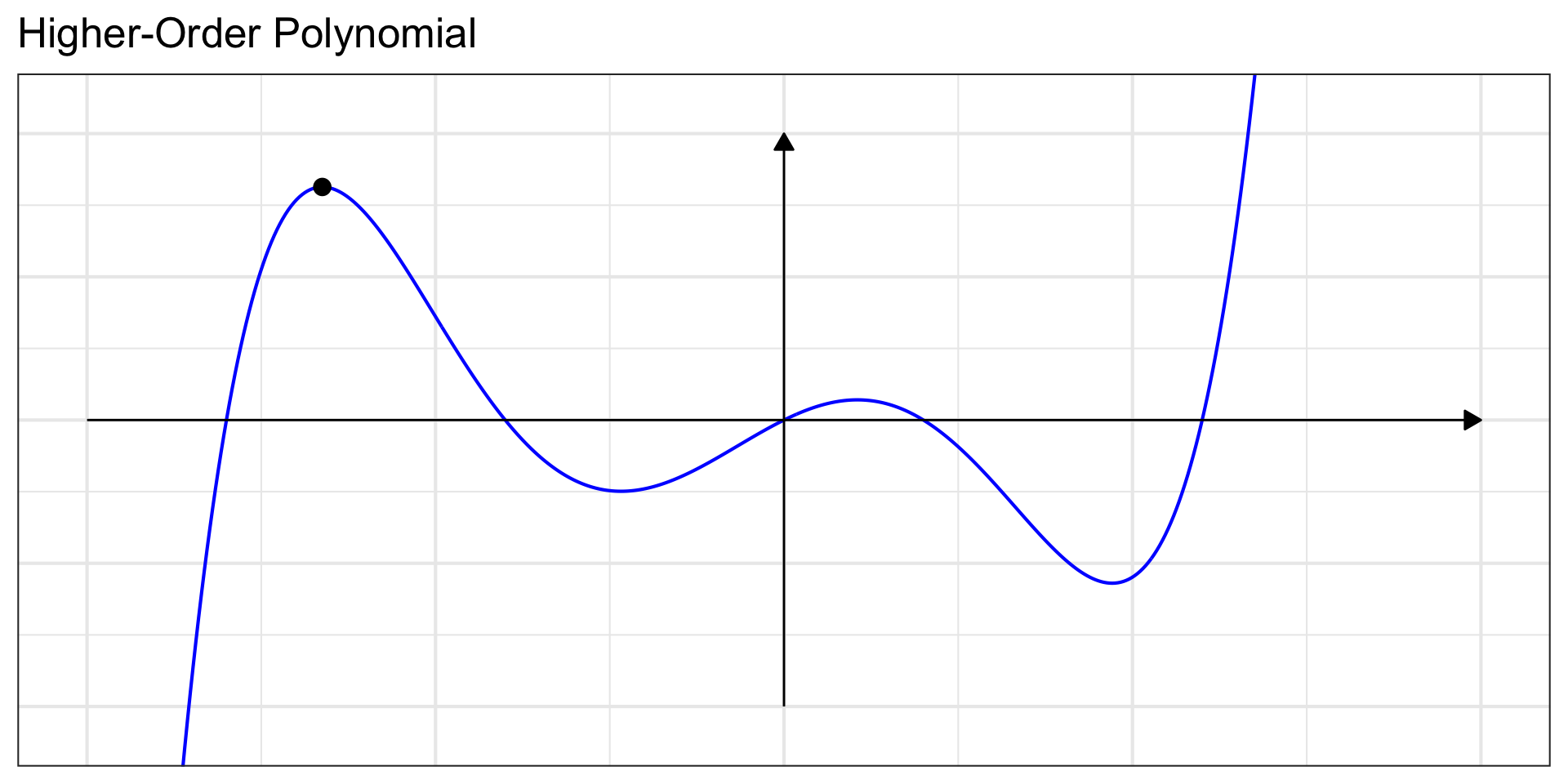
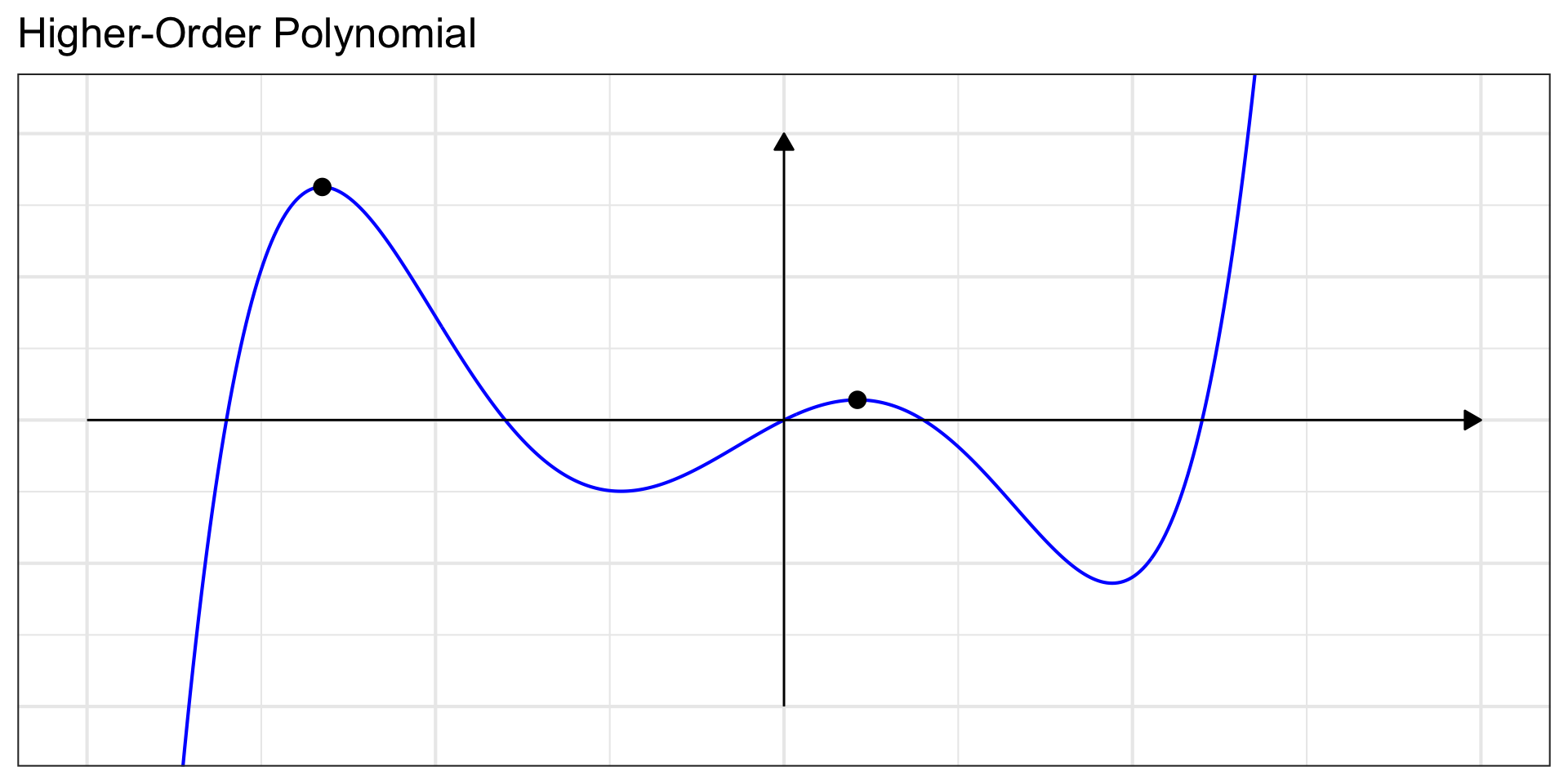
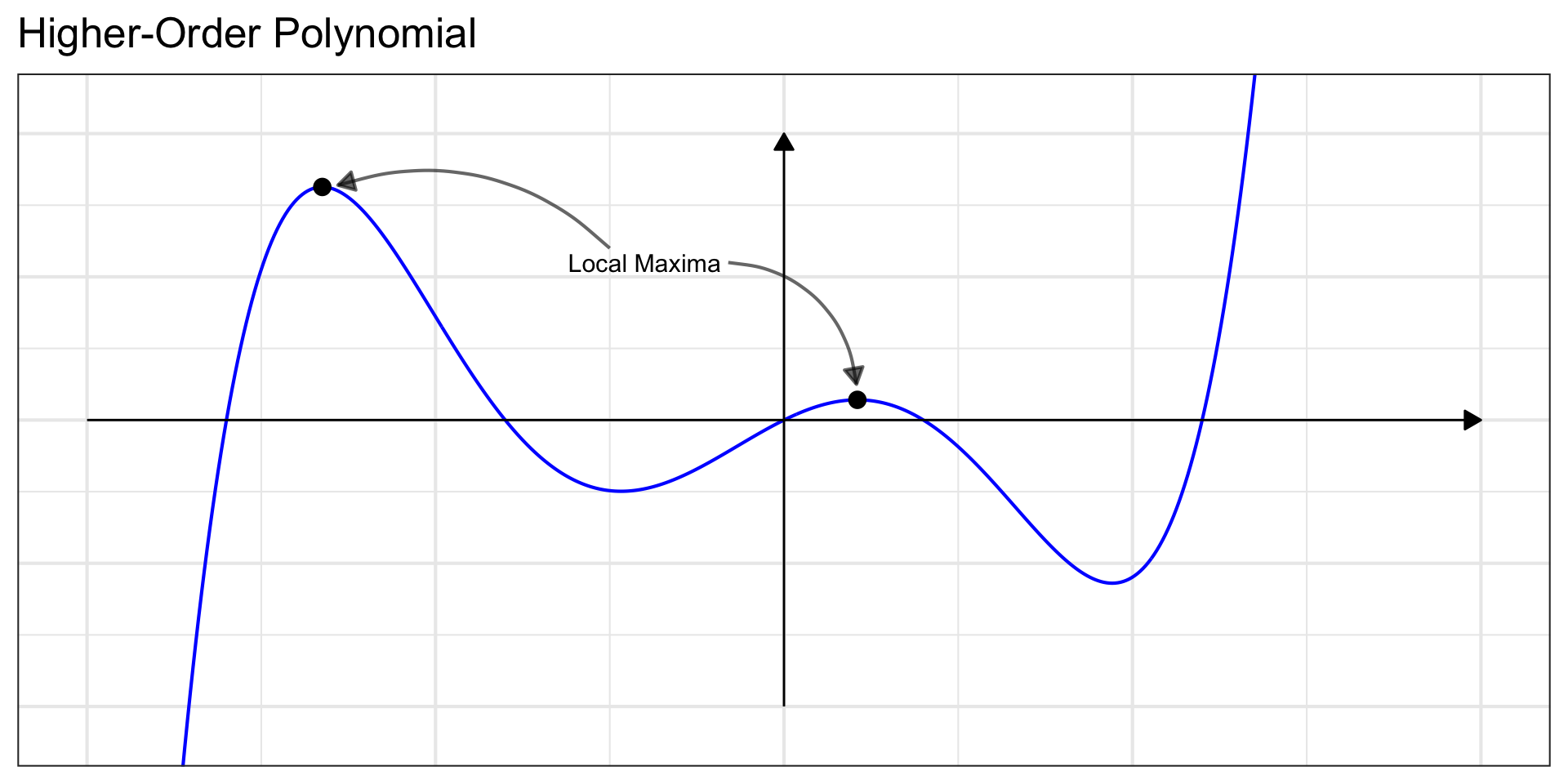
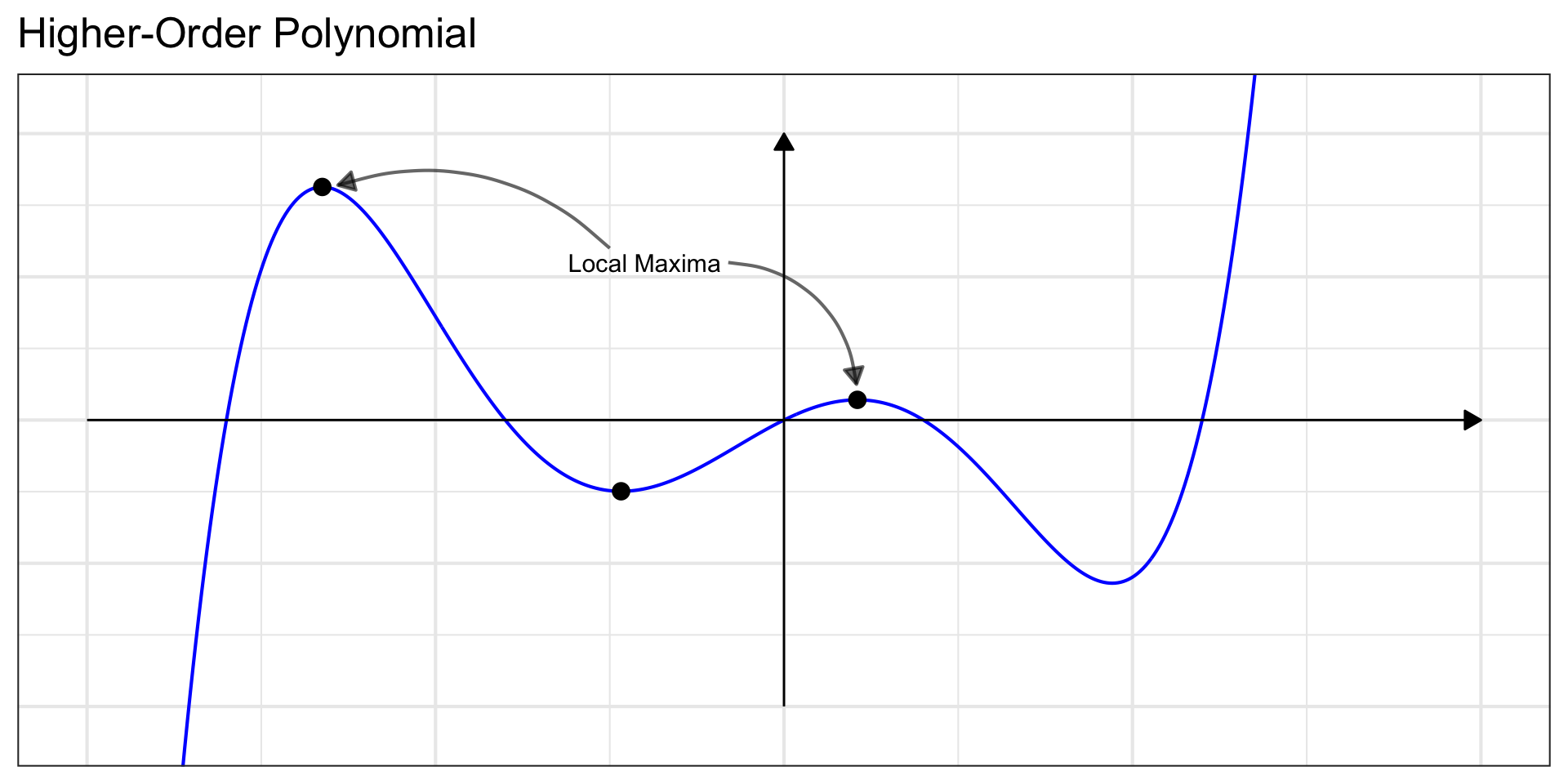
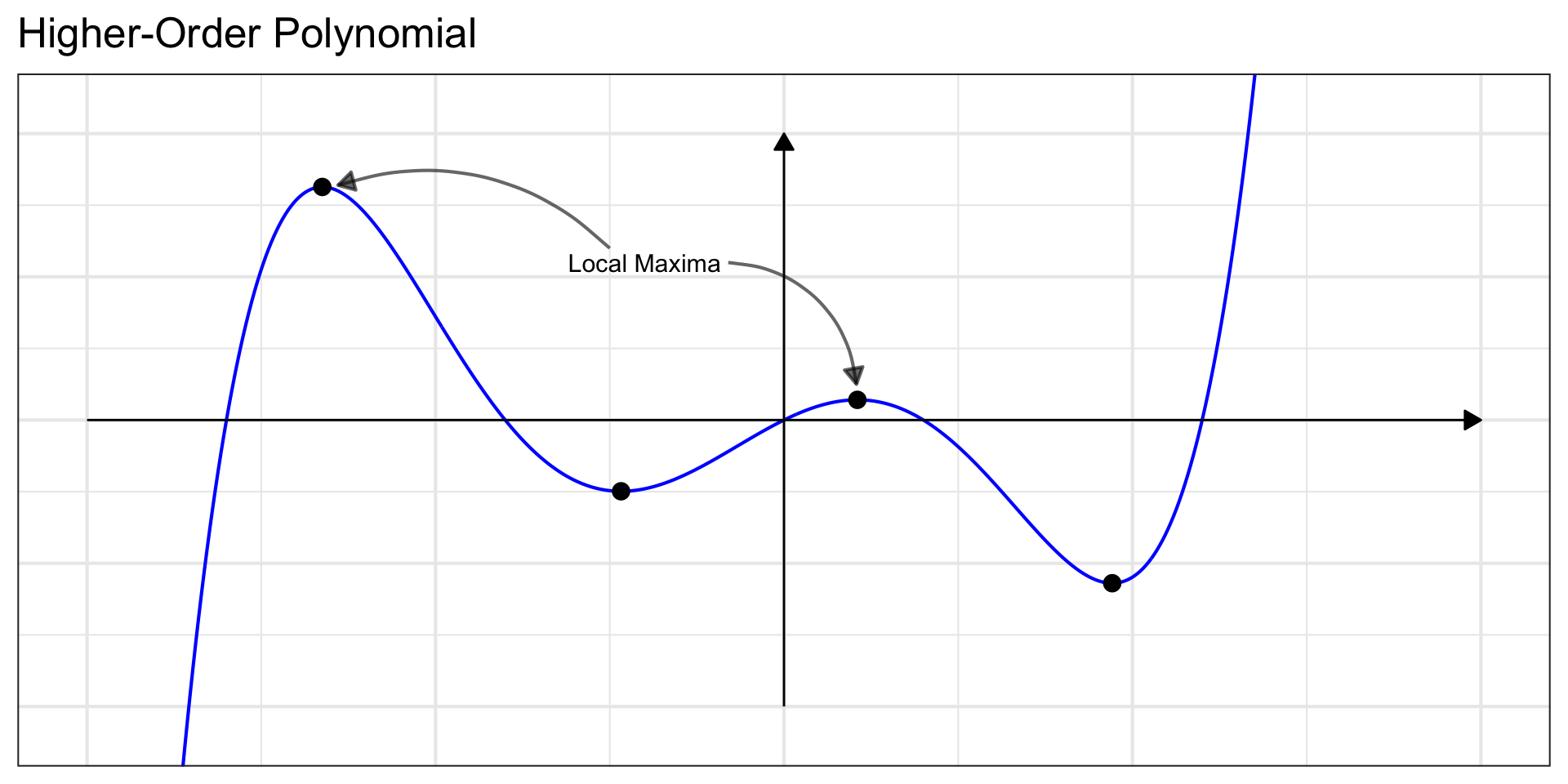
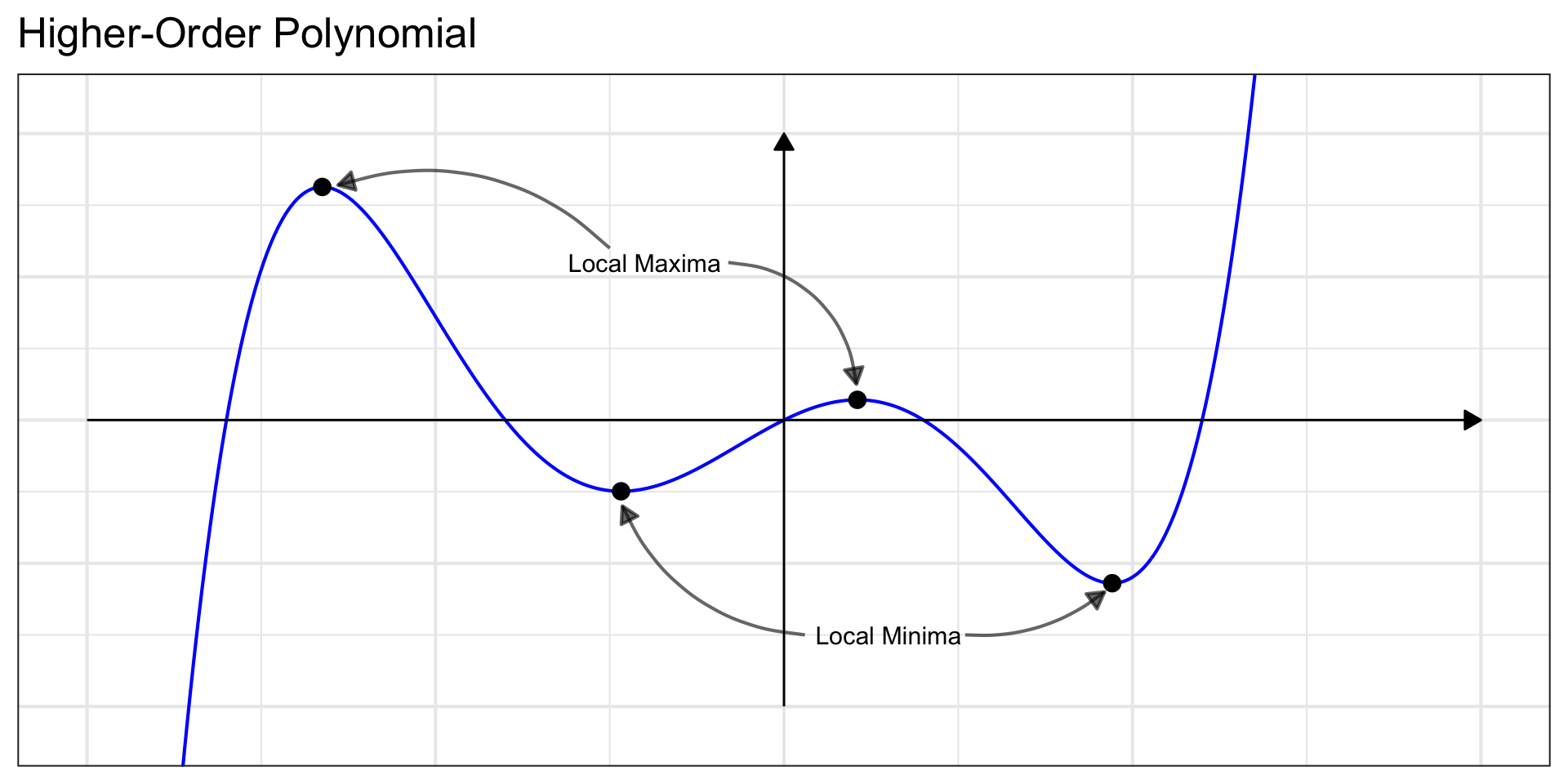
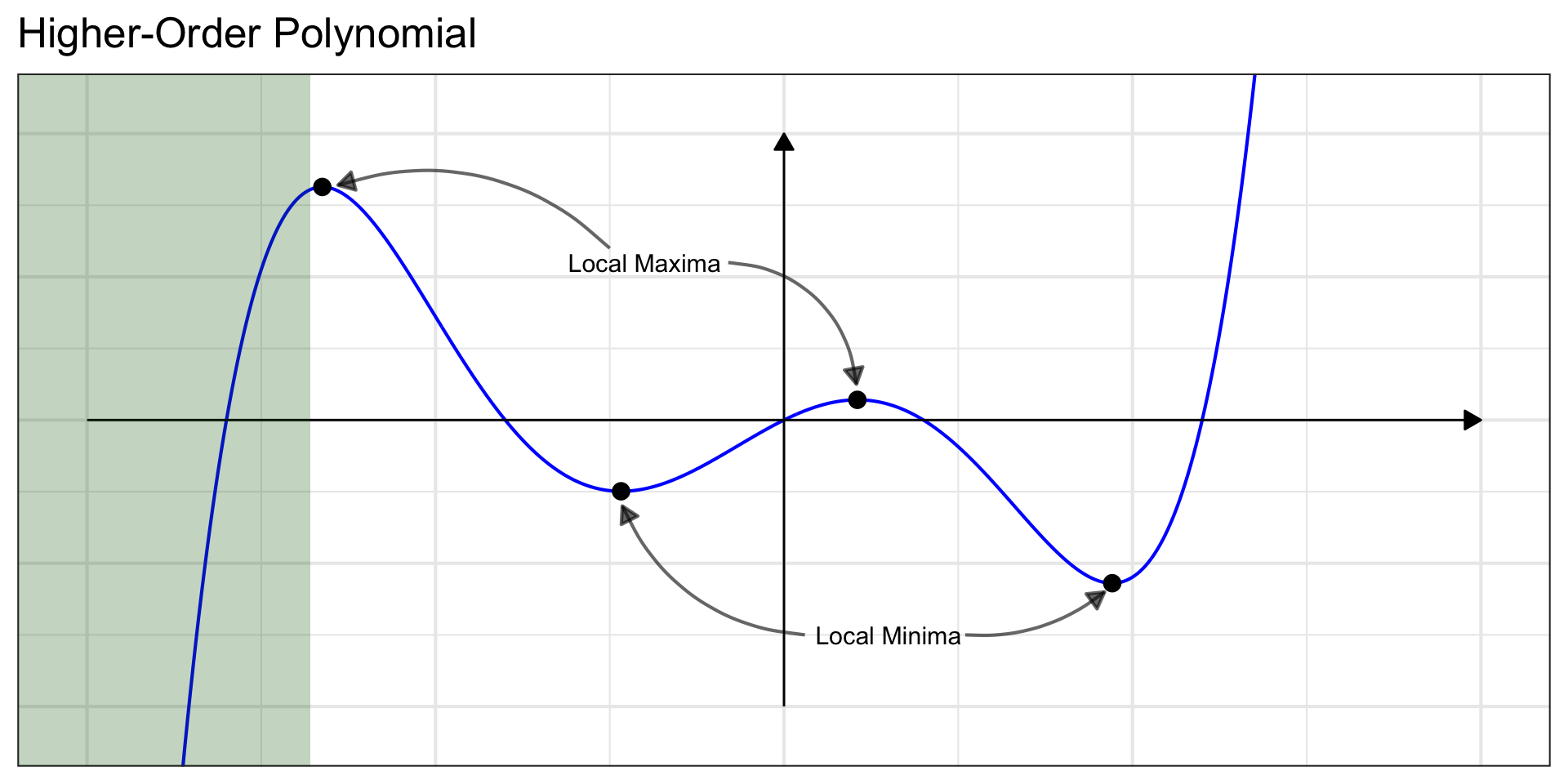
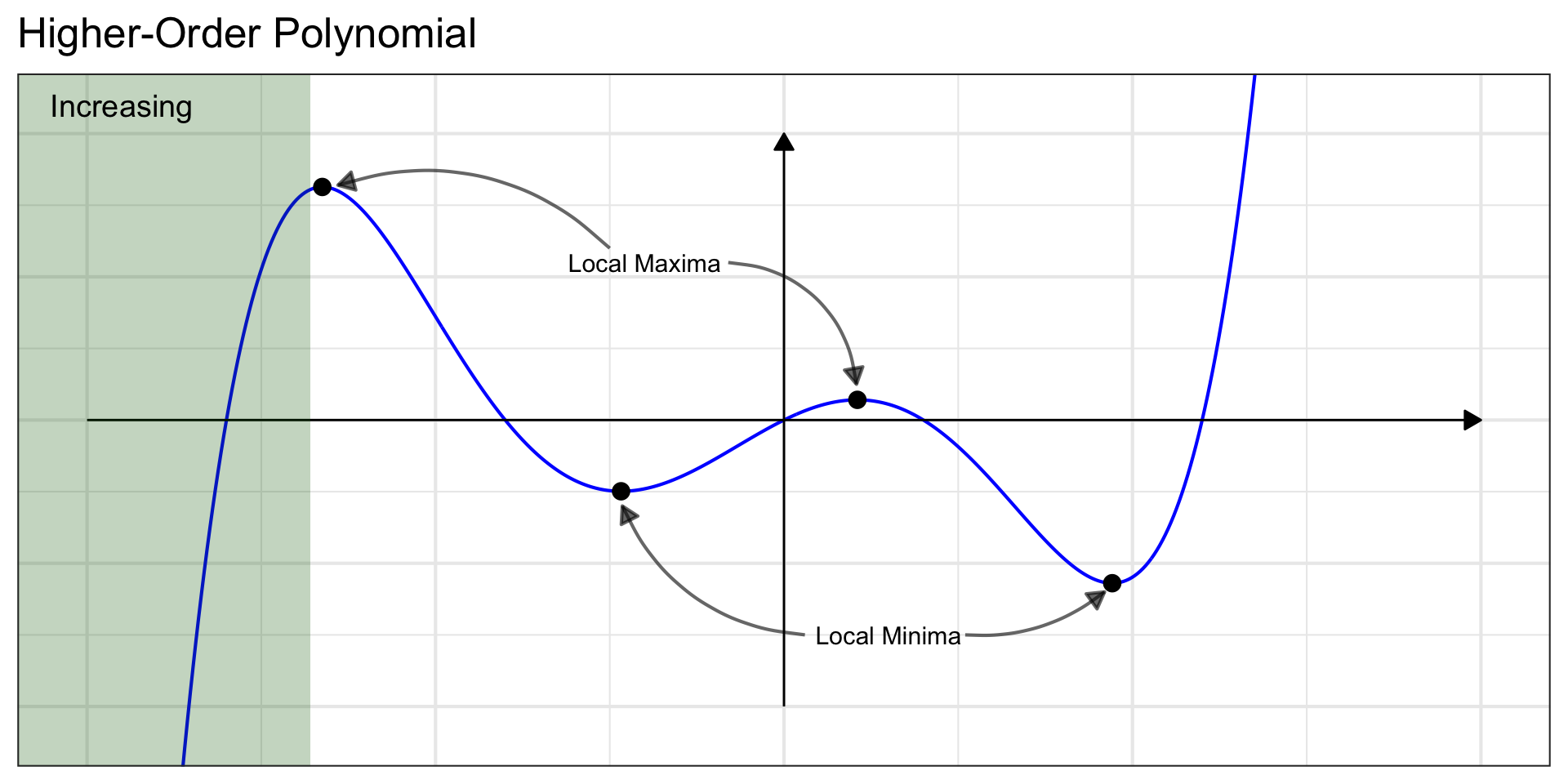
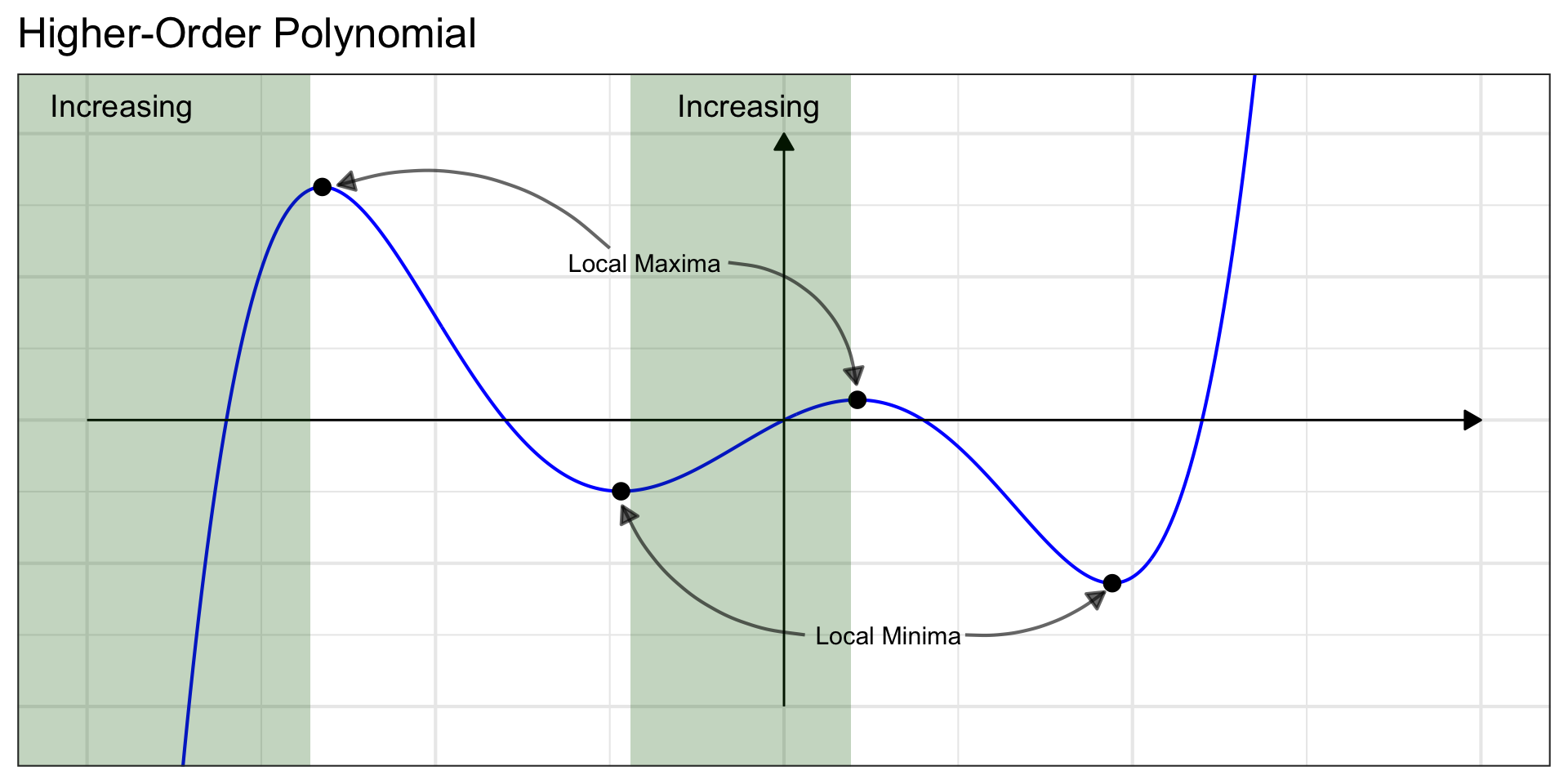
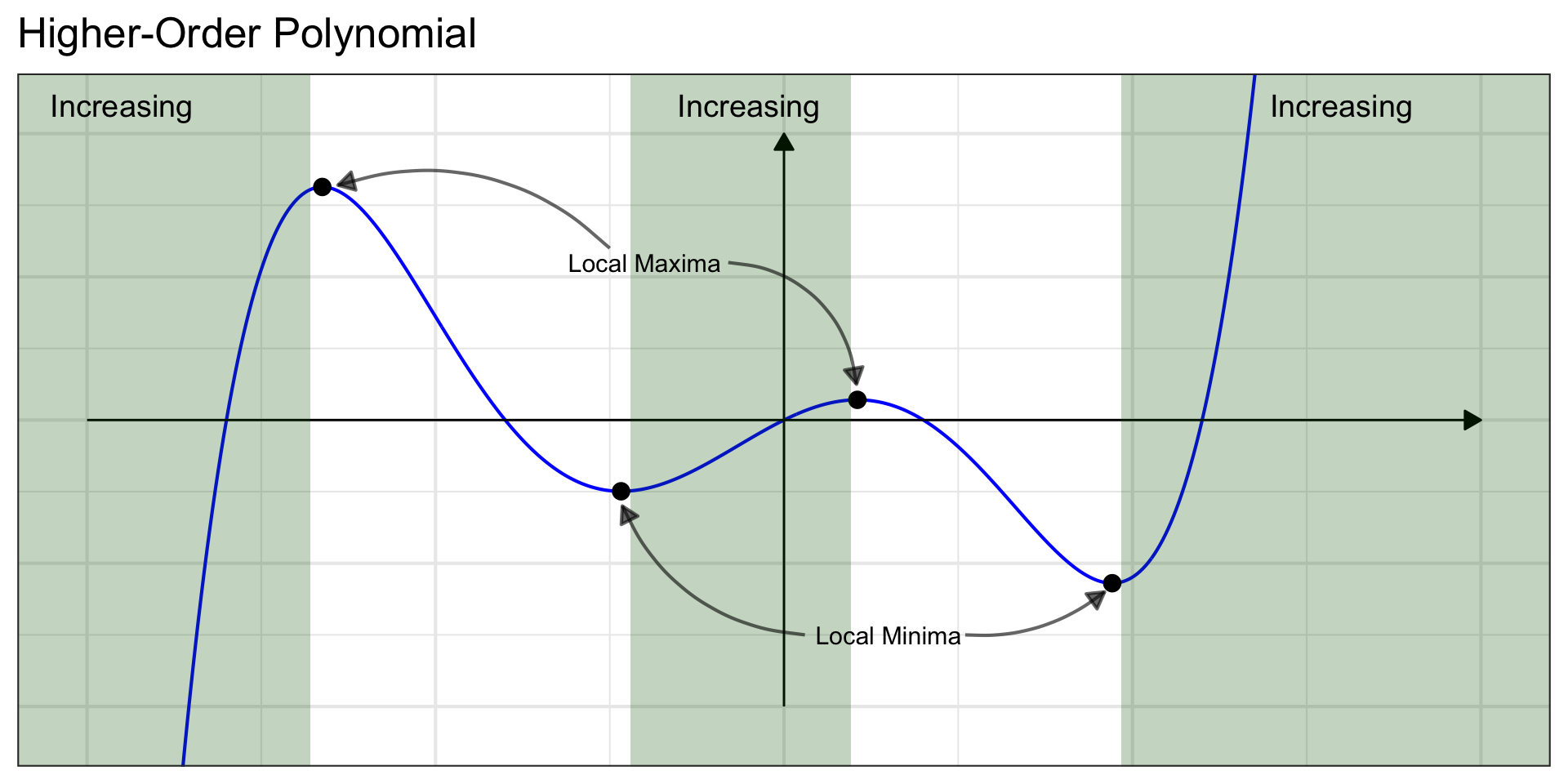
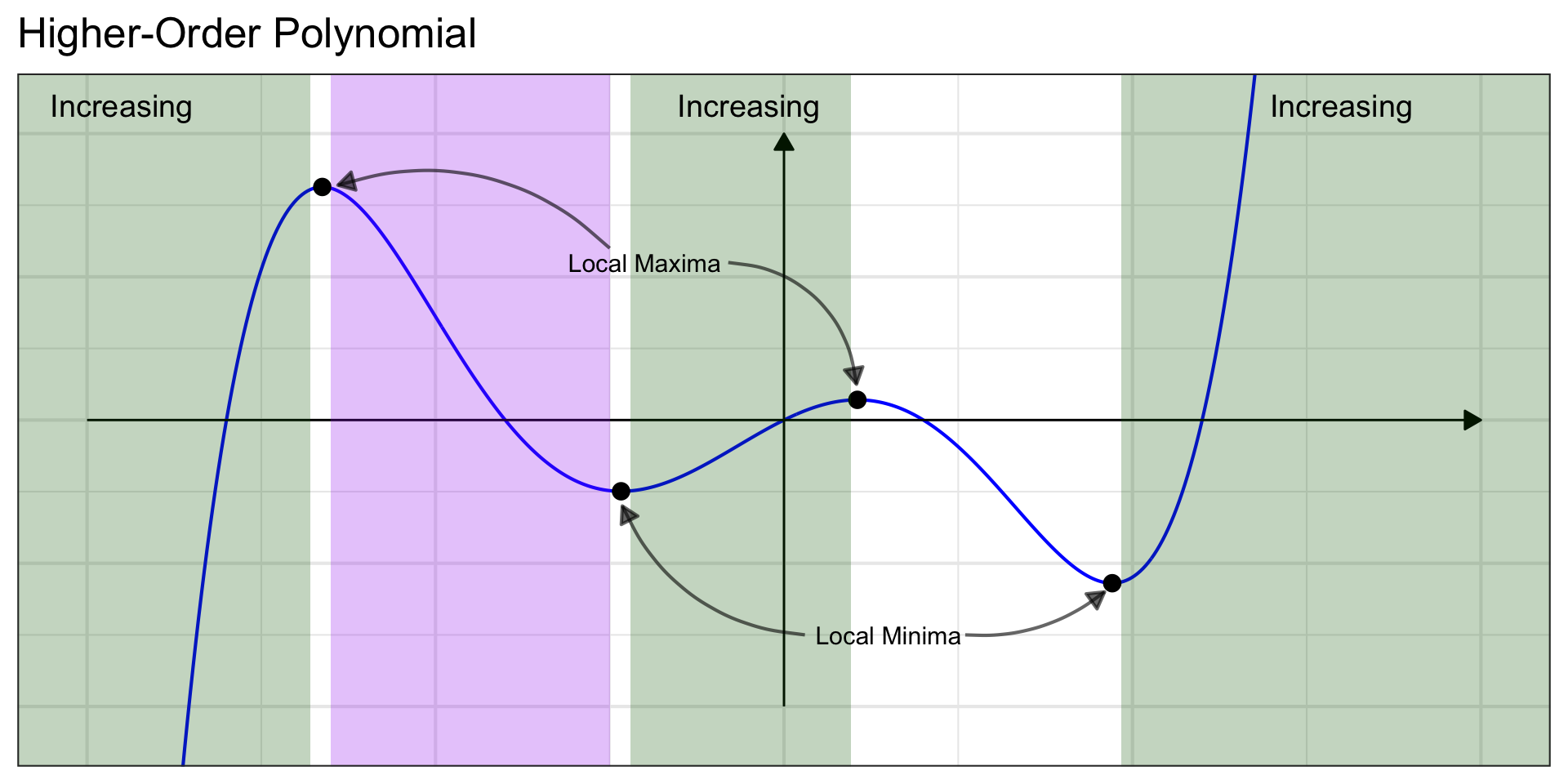
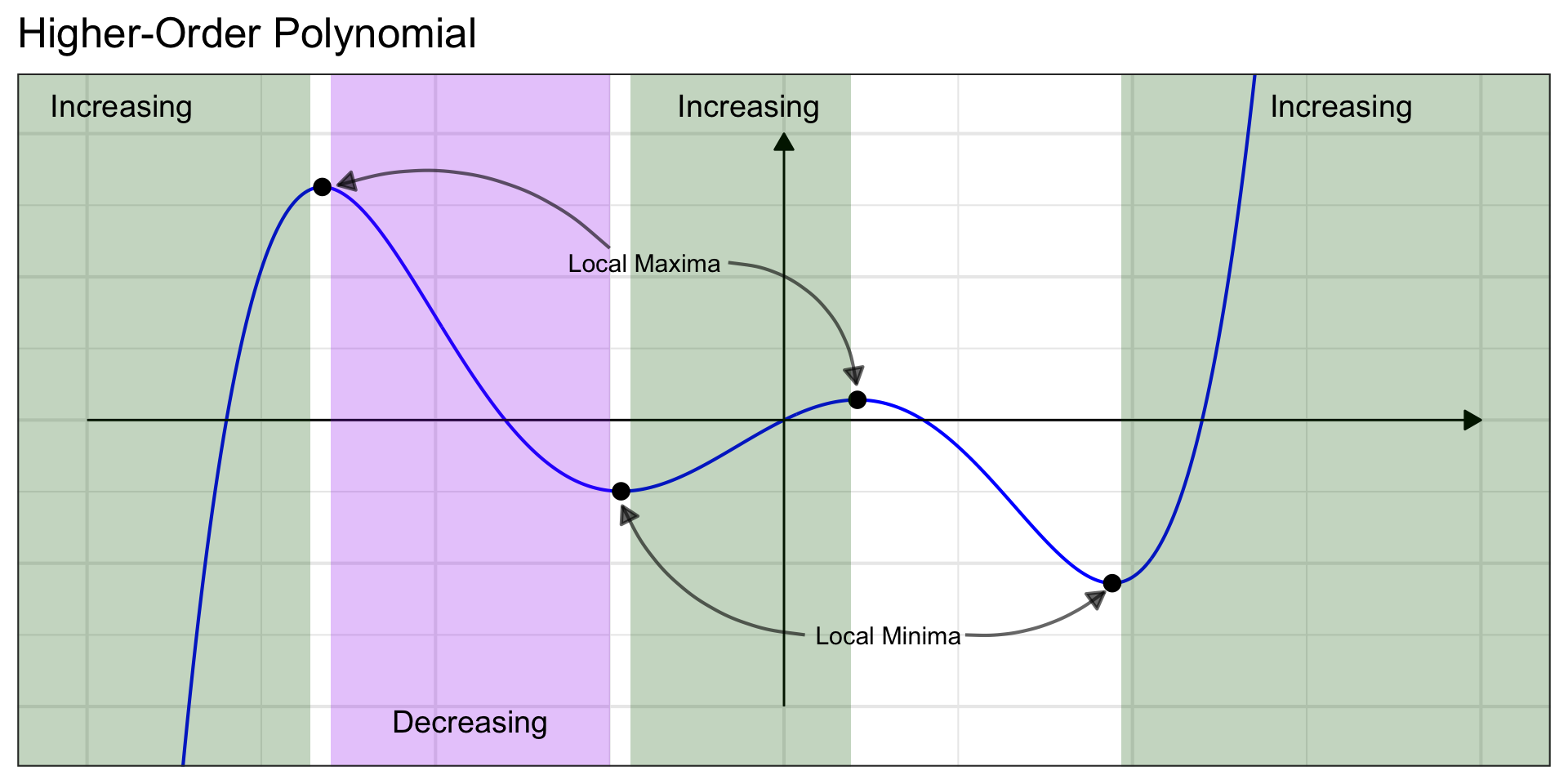
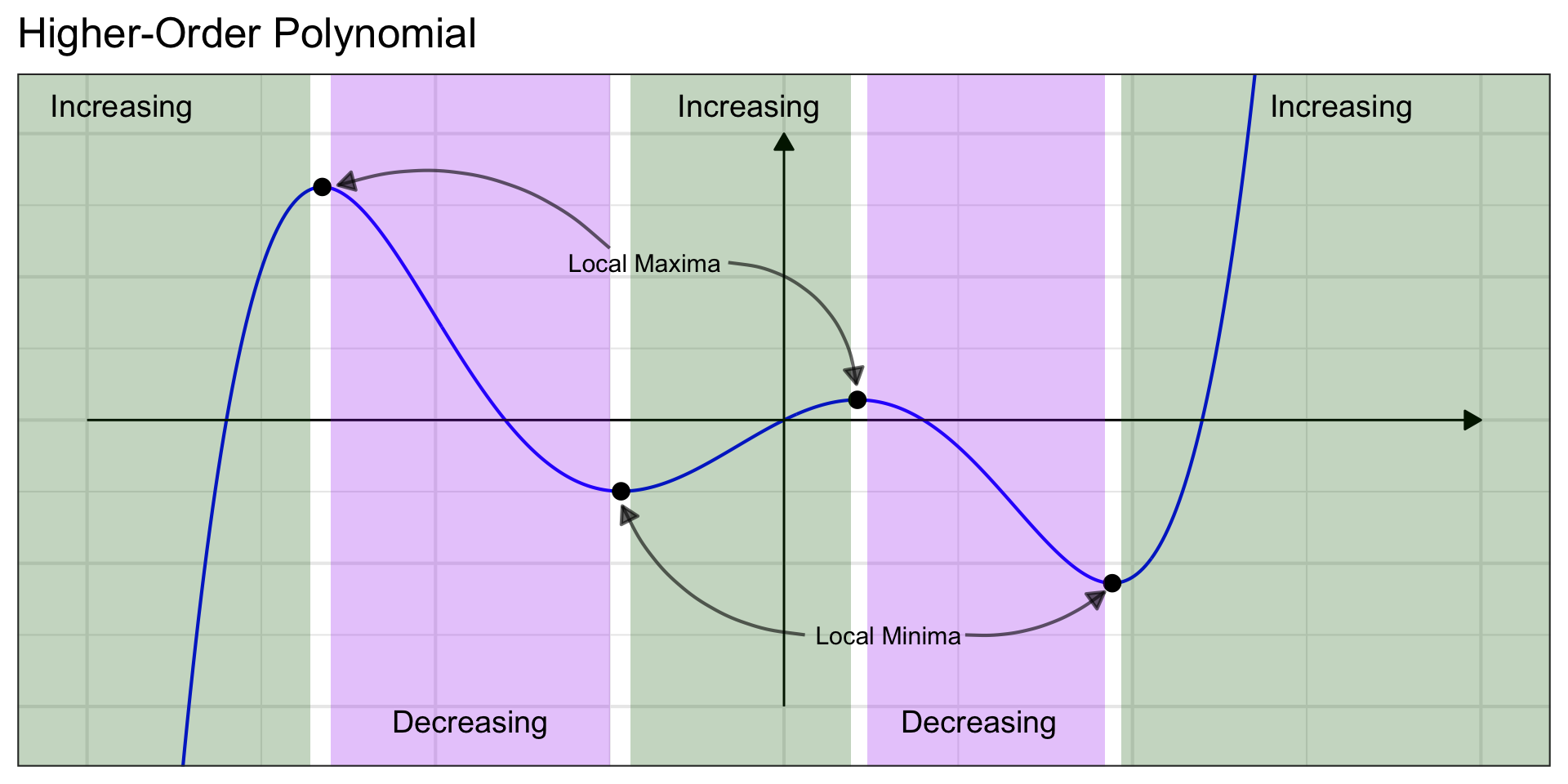
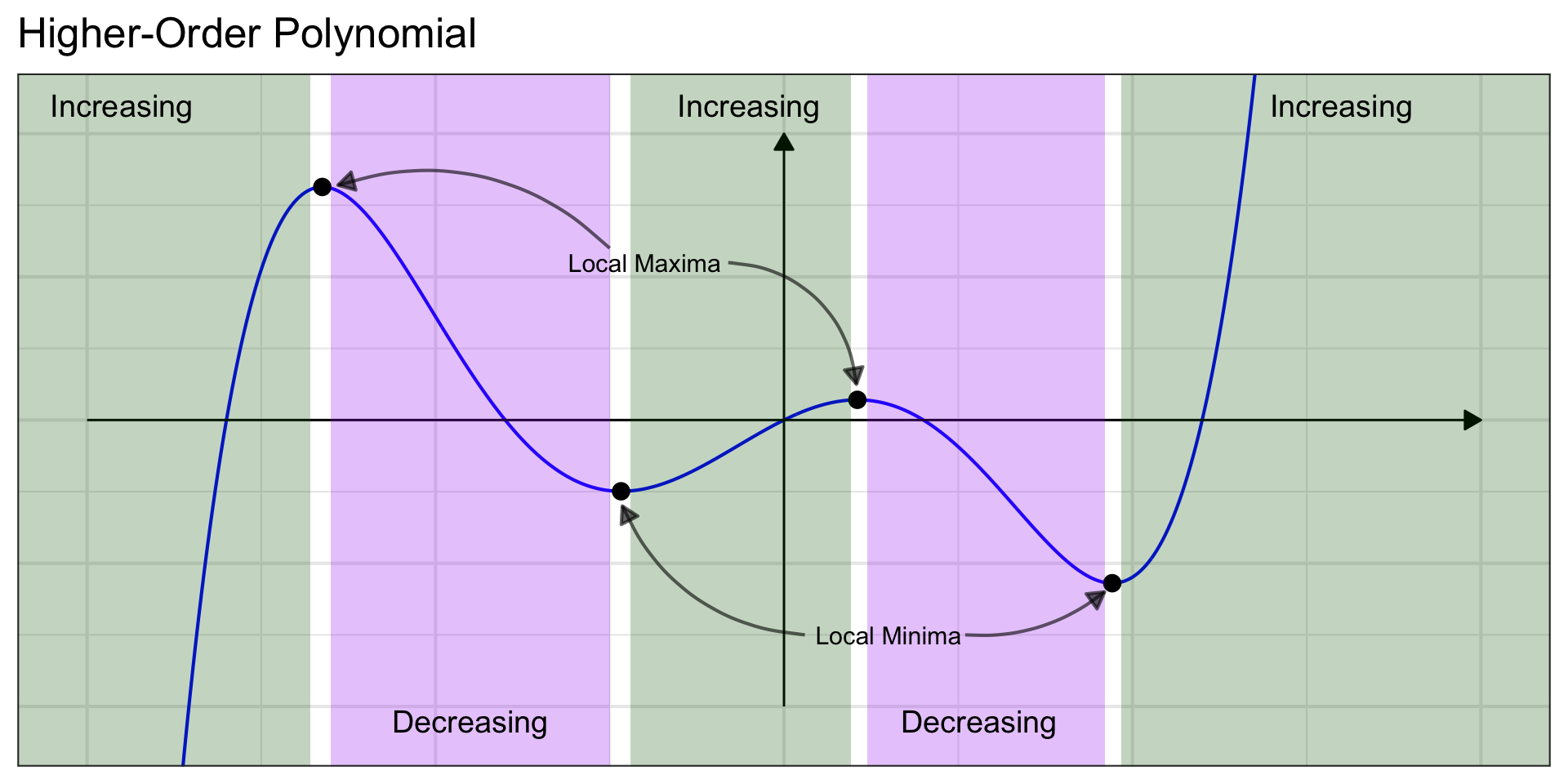
- You’ll spend lots of time optimizing functions – finding minima and maxima.
- Doing that requires you to identify where a function is increasing or decreasing – and finding when it is doing neither.
- This requires knowledge of functions and strategies for solving a variety of equations – we’ll build that foundation here in PreCalculus.
What Are We Here For?
We won’t have the tools to find minima or maxima of many functions in PreCalculus.
Instead, we’ll focus on foundational knowledge, relationships, and procedures that will be helpful to you when you get to Calculus.
What Are We Here For?
We won’t have the tools to find minima or maxima of many functions in PreCalculus.
Instead, we’ll focus on foundational knowledge, relationships, and procedures that will be helpful to you when you get to Calculus.
![]()
What Are We Here For?
We won’t have the tools to find minima or maxima of many functions in PreCalculus.
Instead, we’ll focus on foundational knowledge, relationships, and procedures that will be helpful to you when you get to Calculus.
![]()
What Are We Here For?
We won’t have the tools to find minima or maxima of many functions in PreCalculus.
Instead, we’ll focus on foundational knowledge, relationships, and procedures that will be helpful to you when you get to Calculus.
![]()
What Are We Here For?
We won’t have the tools to find minima or maxima of many functions in PreCalculus.
Instead, we’ll focus on foundational knowledge, relationships, and procedures that will be helpful to you when you get to Calculus.
![]()
What Are We Here For?
We won’t have the tools to find minima or maxima of many functions in PreCalculus.
Instead, we’ll focus on foundational knowledge, relationships, and procedures that will be helpful to you when you get to Calculus.
![]()
What Are We Here For?
We won’t have the tools to find minima or maxima of many functions in PreCalculus.
Instead, we’ll focus on foundational knowledge, relationships, and procedures that will be helpful to you when you get to Calculus.
![]()
What Are We Here For?
We won’t have the tools to find minima or maxima of many functions in PreCalculus.
Instead, we’ll focus on foundational knowledge, relationships, and procedures that will be helpful to you when you get to Calculus.
![]()
What Are We Here For?
We won’t have the tools to find minima or maxima of many functions in PreCalculus.
Instead, we’ll focus on foundational knowledge, relationships, and procedures that will be helpful to you when you get to Calculus.
![]()
What Are We Here For?
We won’t have the tools to find minima or maxima of many functions in PreCalculus.
Instead, we’ll focus on foundational knowledge, relationships, and procedures that will be helpful to you when you get to Calculus.
![]()
What Are We Here For?
We won’t have the tools to find minima or maxima of many functions in PreCalculus.
Instead, we’ll focus on foundational knowledge, relationships, and procedures that will be helpful to you when you get to Calculus.
![]()
What Are We Here For?
We won’t have the tools to find minima or maxima of many functions in PreCalculus.
Instead, we’ll focus on foundational knowledge, relationships, and procedures that will be helpful to you when you get to Calculus.
![]()
What Are We Here For?
We won’t have the tools to find minima or maxima of many functions in PreCalculus.
Instead, we’ll focus on foundational knowledge, relationships, and procedures that will be helpful to you when you get to Calculus.
![]()
What Are We Here For?
We won’t have the tools to find minima or maxima of many functions in PreCalculus.
Instead, we’ll focus on foundational knowledge, relationships, and procedures that will be helpful to you when you get to Calculus.
![]()
What Are We Here For?
Let’s compare the goals from our current course (PreCalculus) to the look-ahead in Calculus and see how these ideas will align or benefit us moving forward.
- In Calculus, those extreme values occur when a function stops increasing and starts decreasing (or vice-versa).
- This is where the function’s slope is zero (or undefined).
- In PreCalculus, functions may transition from positive to negative at roots / x-intercepts or at domain restrictions.
- This is where the function’s output values are \(0\) or undefined.
- Being able to identify intervals of positivity or negativity in PreCalculus will prepare you to identify intervals where functions are increasing or decreasing in Calculus.
- Limits are tools that will aid you in defining the “slope” of a non-linear function in Calculus – we’ll use them to examine function behavior in PreCalculus.
Syllabus
Major Highlights from the Syllabus: I’ll ask you to read the syllabus, but the most important items are on the following slides.
Instructor and Office Hours
Class Embedded Tutors and Availability
Required Resources
First and foremost…everything is free!
- Optional Textbook: I won’t use a textbook explicitly, but the OpenStax PreCalculus text is a great resource for when you want additional or alternative explanations.
- Online Homework at MyOpenMath is a required component of this course
- The CourseID and Enrollment Key are available in the Welcome! announcement on BrightSpace.
Grading Scheme
| Participation/Exit Tickets (~20) |
10% |
| Homework (~13) |
30% |
| Exams (x4) |
60% |
| Final Exams |
Optional |
Explanations of Grade Items
- Homework: Practicing is critical to your success in PreCalculus. You’ll get unlimited attempts (unpenalized) at all problems on each assignment, and you’ll be graded 50% on completion and 50% on correctness.
- Assignments due on Sundays at 11:59pm
- Late Passes: You get three free (no penalty) late passes to open up assignments again until the end of the semester. No additional late passes will be provided though. Please plan ahead.
- Exams: We’ll have four exams during the semester. Unfortunately, time does not permit for us to have dedicated review class meetings, but I’m always happy to review with people during office hours.
- \(\bigstar\) I Need to Miss an Exam! \(\bigstar\) Things come up – you may be sick, have an emergency, or simply not feel ready to take an exam. In any of these cases, you’ll notify me that you are unable to complete the exam. That exam weight will be shifted to the final exams, where you’ll be required to complete the corresponding optional component of the final exam. No make-up exams will be given.
- Final Exams: The final exams are optional and correspond to Exams I - IV earlier in our semester. You may complete any or all of those exams to replace earlier exam grades (with the average of the original score and the score on the corresponding final exam). If you miss an exam, then you’ll be required to complete the corresponding final exam and that score will count as the entire exam grade.
Brightspace
- Weekly Announcements
- Gradebook
- Go to the webpage for everything else
Course Webpage
I’ve built a webpage to organize our course content.
Syllabus
Tentative timeline
- Links to full notes (in Jupyter/Colab notebook format)
- Links to the discussion slide versions of those notes
- Assignment reminders
What’s Class Like?
- Some lecture is going to be necessary here
- I have complete sets of notes for you and will attempt to keep up with building slides if you want them
- I hope to spend significant class time on collaborative discussion and problem-solving
A Note on Approach to Class
- I’m open to change in all of my courses.
- If the structure isn’t working for you, let’s chat and see what changes we can make to improve your experience.
- If you don’t want to tell me in person, leave an anonymous note under my office door.
My goal in this course is for all of you to leave with the foundation and skills necessary to be successful in Calculus I next semester. We can’t achieve that if you don’t feel like you are benefiting from our class meetings.
A Road Map to Our Semester
- We’ll begin with foundational algebra skills.
- We’ll develop the notion of a function.
- We’ll define and use the limit so that we can use it to discuss continuity and analyse function behavior.
- The remainder of our course will be quite repetitive.
- Introduce a function class.
- Describe its domain, including any domain restrictions.
- Find the \(y\)-intercept.
- Find any roots (\(x\)-intercepts).
- Use limits to analyse behavior near domain restrictions.
- Use limits to analyse end behavior.
- Synthesize results from the analyses above to describe the range and graph the function.
- Determine whether the function is invertible.
- Find the inverse of the function, if it exists.
- Solve equations involving expressions from that particular function class.
Foundational Algebra Review
I’ve posted a library of foundational algebra videos to BrightSpace – please be sure to review those as needed.
\(\bigstar\) In my experience, a lack of foundational algebra skills is really what prevents students from being successful in their higher level mathematics coursework. Any time you spend shoring up your algebra skills is time well-spent. \(\bigstar\)
Don’t
Cancel terms \(\require{cancel}\displaystyle{\frac{\cancel{3x^2} + 6x^3}{\cancel{3x^2}}}\) ✗
Sloppy, disorganized work ✗
Unclear, ambiguous notation \(\frac{2~+~}{2} \stackrel{6x}{}\) ✗
“Distribute” functions and exponents \(\sin\left(a + b\right) \neq \sin\left(a\right) + \sin\left(b\right)\) and \(\left(x + y\right)^2 \neq x^2 + y^2\) ✗
Do
Cancel factors \(\require{cancel}\displaystyle{\frac{\cancel{3x^2}\left(1 + 2x\right)}{\cancel{3x^2}}}\) ✓
Clear notation with parentheses when helpful \(\frac{\left(2 + 6x\right)}{2}\) ✓
Distribute with multiplication \(2\left(x + y\right) = 2x + 2y\), and expand with exponents \(\left(x + y\right)^2 = \left(x + y\right)\left(x + y\right)\) ✓
Like Terms and Order of Operations
Problem 1: Use distribution to expand the expression \(5\left(2x^2 + 3x -8\right)\).
Solution.
\[\begin{align} 5\left(2x^2 + 3x - 8\right)
\end{align}\]
Like Terms and Order of Operations
Problem 1: Use distribution to expand the expression \(5\left(2x^2 + 3x -8\right)\).
Solution.
\[\begin{align} 5\left(2x^2 + 3x - 8\right) &= 5\left(2x^2 +3x + \left(-8\right)\right)
\end{align}\]
Like Terms and Order of Operations
Problem 1: Use distribution to expand the expression \(5\left(2x^2 + 3x -8\right)\).
Solution.
\[\begin{align} 5\left(2x^2 + 3x - 8\right) &= \color{blue}{5}\left(2x^2 +3x + \left(-8\right)\right)\\
&= \color{blue}{5}\left(2x^2\right) + \color{blue}{5}\left(3x\right) + \color{blue}{5}\left(-8\right)
\end{align}\]
Like Terms and Order of Operations
Problem 1: Use distribution to expand the expression \(5\left(2x^2 + 3x -8\right)\).
Solution.
\[\begin{align} 5\left(2x^2 + 3x - 8\right) &= 5\left(2x^2 +3x + \left(-8\right)\right)\\
&= 5\left(2x^2\right) + 5\left(3x\right) + 5\left(-8\right)\\
&= \boxed{~10x^2 + 15x - 40~}
\end{align}\]
Like Terms and Order of Operations
Problem 2: Simplify the expression \(3x^5 - 5x^3 - 3\left(2x^3 - x^5 + 5x^4\right)\) to include as few terms as possible.
Solution.
\[\begin{align} 3x^5 - 5x^3 - 3\left(2x^3 - x^5 + 5x^4\right)
\end{align}\]
Like Terms and Order of Operations
Problem 2: Simplify the expression \(3x^5 - 5x^3 - 3\left(2x^3 - x^5 + 5x^4\right)\) to include as few terms as possible.
Solution.
\[\begin{align} 3x^5 - 5x^3 - 3\left(2x^3 - x^5 + 5x^4\right) &= 3x^5 - 5x^3 + \color{blue}{\left(-3\right)}\left(2x^3 + \left(-x^5\right) + 5x^4\right)
\end{align}\]
Like Terms and Order of Operations
Problem 2: Simplify the expression \(3x^5 - 5x^3 - 3\left(2x^3 - x^5 + 5x^4\right)\) to include as few terms as possible.
Solution.
\[\begin{align} 3x^5 - 5x^3 - 3\left(2x^3 - x^5 + 5x^4\right) &= 3x^5 - 5x^3 + \color{blue}{\left(-3\right)}\left(2x^3 + \left(-x^5\right) + 5x^4\right)\\
&= 3x^5 - 5x^3 + \color{blue}{\left(-3\right)}\left(2x^3\right) + \color{blue}{\left(-3\right)}\left(-x^5\right) + \color{blue}{\left(-3\right)}\left(5x^4\right)
\end{align}\]
Like Terms and Order of Operations
Problem 2: Simplify the expression \(3x^5 - 5x^3 - 3\left(2x^3 - x^5 + 5x^4\right)\) to include as few terms as possible.
Solution.
\[\begin{align} 3x^5 - 5x^3 - 3\left(2x^3 - x^5 + 5x^4\right) &= 3x^5 - 5x^3 + \left(-3\right)\left(2x^3 + \left(-x^5\right) + 5x^4\right)\\
&= 3x^5 - 5x^3 + \color{blue}{\left(-3\right)}\left(2x^3\right) + \color{blue}{\left(-3\right)}\left(-x^5\right) + \color{blue}{\left(-3\right)}\left(5x^4\right)\\
&= 3x^5 - 5x^3 \color{blue}{- 6x^3 + 3x^5 - 15x^4}
\end{align}\]
Like Terms and Order of Operations
Problem 2: Simplify the expression \(3x^5 - 5x^3 - 3\left(2x^3 - x^5 + 5x^4\right)\) to include as few terms as possible.
Solution.
\[\begin{align} 3x^5 - 5x^3 - 3\left(2x^3 - x^5 + 5x^4\right) &= 3x^5 - 5x^3 + \left(-3\right)\left(2x^3 + \left(-x^5\right) + 5x^4\right)\\
&= 3x^5 - 5x^3 + \left(-3\right)\left(2x^3\right) + \left(-3\right)\left(-x^5\right) + \left(-3\right)\left(5x^4\right)\\
&= \color{blue}{3x^5} - 5x^3 - 6x^3 + \color{blue}{3x^5} - 15x^4
\end{align}\]
Like Terms and Order of Operations
Problem 2: Simplify the expression \(3x^5 - 5x^3 - 3\left(2x^3 - x^5 + 5x^4\right)\) to include as few terms as possible.
Solution.
\[\begin{align} 3x^5 - 5x^3 - 3\left(2x^3 - x^5 + 5x^4\right) &= 3x^5 - 5x^3 + \left(-3\right)\left(2x^3 + \left(-x^5\right) + 5x^4\right)\\
&= 3x^5 - 5x^3 + \left(-3\right)\left(2x^3\right) + \left(-3\right)\left(-x^5\right) + \left(-3\right)\left(5x^4\right)\\
&= \color{blue}{3x^5} - 5x^3 - 6x^3 + \color{blue}{3x^5} - 15x^4\\
&= \color{blue}{6x^5} -5x^3 - 6x^3 - 15x^4
\end{align}\]
Like Terms and Order of Operations
Problem 2: Simplify the expression \(3x^5 - 5x^3 - 3\left(2x^3 - x^5 + 5x^4\right)\) to include as few terms as possible.
Solution.
\[\begin{align} 3x^5 - 5x^3 - 3\left(2x^3 - x^5 + 5x^4\right) &= 3x^5 - 5x^3 + \left(-3\right)\left(2x^3 + \left(-x^5\right) + 5x^4\right)\\
&= 3x^5 - 5x^3 + \left(-3\right)\left(2x^3\right) + \left(-3\right)\left(-x^5\right) + \left(-3\right)\left(5x^4\right)\\
&= 3x^5 - 5x^3 - 6x^3 + 3x^5 - 15x^4\\
&= 6x^5 \color{blue}{- 5x^3 - 6x^3} - 15x^4
\end{align}\]
Like Terms and Order of Operations
Problem 2: Simplify the expression \(3x^5 - 5x^3 - 3\left(2x^3 - x^5 + 5x^4\right)\) to include as few terms as possible.
Solution.
\[\begin{align} 3x^5 - 5x^3 - 3\left(2x^3 - x^5 + 5x^4\right) &= 3x^5 - 5x^3 + \left(-3\right)\left(2x^3 + \left(-x^5\right) + 5x^4\right)\\
&= 3x^5 - 5x^3 + \left(-3\right)\left(2x^3\right) + \left(-3\right)\left(-x^5\right) + \left(-3\right)\left(5x^4\right)\\
&= 3x^5 - 5x^3 - 6x^3 + 3x^5 - 15x^4\\
&= 6x^5 \color{blue}{- 5x^3 - 6x^3} - 15x^4\\
&= 6x^5 \color{blue}{- 11x^3} - 15x^4
\end{align}\]
Like Terms and Order of Operations
Problem 2: Simplify the expression \(3x^5 - 5x^3 - 3\left(2x^3 - x^5 + 5x^4\right)\) to include as few terms as possible.
Solution.
\[\begin{align} 3x^5 - 5x^3 - 3\left(2x^3 - x^5 + 5x^4\right) &= 3x^5 - 5x^3 + \left(-3\right)\left(2x^3 + \left(-x^5\right) + 5x^4\right)\\
&= 3x^5 - 5x^3 + \left(-3\right)\left(2x^3\right) + \left(-3\right)\left(-x^5\right) + \left(-3\right)\left(5x^4\right)\\
&= 3x^5 - 5x^3 - 6x^3 + 3x^5 - 15x^4\\
&= 6x^5 - 5x^3 - 6x^3 - 15x^4\\
&= 6x^5 - 11x^3 - 15x^4\\
&= \boxed{~6x^5 - 15x^4 - 11x^3~}
\end{align}\]
Like Terms and Order of Operations
Problem 3: Simplify the expression \(2\left(3x + 4y\right) - 5\left(x - 2y\right)\) to include as few terms as possible.
Solution.
\[\begin{align} 2\left(3x + 4y\right) - 5\left(x - 2y\right)
\end{align}\]
Like Terms and Order of Operations
Problem 3: Simplify the expression \(2\left(3x + 4y\right) - 5\left(x - 2y\right)\) to include as few terms as possible.
Solution.
\[\begin{align} 2\left(3x + 4y\right) - 5\left(x - 2y\right) &= 2\left(3x + 4y\right) + \left(-5\right)\left(x + \left(-2y\right)\right)
\end{align}\]
Like Terms and Order of Operations
Problem 3: Simplify the expression \(2\left(3x + 4y\right) - 5\left(x - 2y\right)\) to include as few terms as possible.
Solution.
\[\begin{align} 2\left(3x + 4y\right) - 5\left(x - 2y\right) &= 2\left(3x + 4y\right) + \left(-5\right)\left(x + \left(-2y\right)\right)\\
&= 2\left(3x\right) + 2\left(4y\right) + \left(-5\right)x + \left(-5\right)\left(-2y\right)
\end{align}\]
Like Terms and Order of Operations
Problem 3: Simplify the expression \(2\left(3x + 4y\right) - 5\left(x - 2y\right)\) to include as few terms as possible.
Solution.
\[\begin{align} 2\left(3x + 4y\right) - 5\left(x - 2y\right) &= 2\left(3x + 4y\right) + \left(-5\right)\left(x + \left(-2y\right)\right)\\
&= 2\left(3x\right) + 2\left(4y\right) + \left(-5\right)x + \left(-5\right)\left(-2y\right)\\
&= 6x + 8y + \left(-5x\right) + \left(10y\right)
\end{align}\]
Like Terms and Order of Operations
Problem 3: Simplify the expression \(2\left(3x + 4y\right) - 5\left(x - 2y\right)\) to include as few terms as possible.
Solution.
\[\begin{align} 2\left(3x + 4y\right) - 5\left(x - 2y\right) &= 2\left(3x + 4y\right) + \left(-5\right)\left(x + \left(-2y\right)\right)\\
&= 2\left(3x\right) + 2\left(4y\right) + \left(-5\right)x + \left(-5\right)\left(-2y\right)\\
&= 6x + 8y + \left(-5x\right) + \left(10y\right)\\
&= 6x + 8y - 5x + 10y
\end{align}\]
Like Terms and Order of Operations
Problem 3: Simplify the expression \(2\left(3x + 4y\right) - 5\left(x - 2y\right)\) to include as few terms as possible.
Solution.
\[\begin{align} 2\left(3x + 4y\right) - 5\left(x - 2y\right) &= 2\left(3x + 4y\right) + \left(-5\right)\left(x + \left(-2y\right)\right)\\
&= 2\left(3x\right) + 2\left(4y\right) + \left(-5\right)x + \left(-5\right)\left(-2y\right)\\
&= 6x + 8y + \left(-5x\right) + \left(10y\right)\\
&= 6x + 8y - 5x + 10y\\
&= x + 8y + 10y
\end{align}\]
Like Terms and Order of Operations
Problem 3: Simplify the expression \(2\left(3x + 4y\right) - 5\left(x - 2y\right)\) to include as few terms as possible.
Solution.
\[\begin{align} 2\left(3x + 4y\right) - 5\left(x - 2y\right) &= 2\left(3x + 4y\right) + \left(-5\right)\left(x + \left(-2y\right)\right)\\
&= 2\left(3x\right) + 2\left(4y\right) + \left(-5\right)x + \left(-5\right)\left(-2y\right)\\
&= 6x + 8y + \left(-5x\right) + \left(10y\right)\\
&= 6x + 8y - 5x + 10y\\
&= x + 8y + 10y\\
&= \boxed{~x + 18y~}
\end{align}\]
Evaluating Expressions
We’ll often have need to evaluate expressions for given values of variables.
Problem 4: Evaluate the expression \(x^2 - 2x + 1\) for \(x = 5\).
Solution.
\[\begin{align} x^2 - 2x + 1
\end{align}\]
Evaluating Expressions
We’ll often have need to evaluate expressions for given values of variables.
We’ll try just a single example here, but you can see more examples in this video and also this one that includes evaluating algebraic expressions with exponents.
Problem 4: Evaluate the expression \(x^2 - 2x + 1\) for \(x = 5\).
Solution.
\[\begin{align} x^2 - 2x + 1 &\stackrel{\substack{x = 5\\ \to}}{=} \left(5\right)^2 - 2\left(5\right) + 1
\end{align}\]
Evaluating Expressions
We’ll often have need to evaluate expressions for given values of variables.
We’ll try just a single example here, but you can see more examples in this video and also this one that includes evaluating algebraic expressions with exponents.
Problem 4: Evaluate the expression \(x^2 - 2x + 1\) for \(x = 5\).
Solution.
\[\begin{align} x^2 - 2x + 1 &\stackrel{\substack{x = 5\\ \to}}{=} \left(5\right)^2 - 2\left(5\right) + 1\\
&= 25 - 10 + 1
\end{align}\]
Evaluating Expressions
We’ll often have need to evaluate expressions for given values of variables.
We’ll try just a single example here, but you can see more examples in this video and also this one that includes evaluating algebraic expressions with exponents.
Problem 4: Evaluate the expression \(x^2 - 2x + 1\) for \(x = 5\).
Solution.
\[\begin{align} x^2 - 2x + 1 &\stackrel{\substack{x = 5\\ \to}}{=} \left(5\right)^2 - 2\left(5\right) + 1\\
&= 25 - 10 + 1\\
&= 15 + 1
\end{align}\]
Evaluating Expressions
We’ll often have need to evaluate expressions for given values of variables.
We’ll try just a single example here, but you can see more examples in this video and also this one that includes evaluating algebraic expressions with exponents.
Problem 4: Evaluate the expression \(x^2 - 2x + 1\) for \(x = 5\).
Solution.
\[\begin{align} x^2 - 2x + 1 &\stackrel{\substack{x = 5\\ \to}}{=} \left(5\right)^2 - 2\left(5\right) + 1\\
&= 25 - 10 + 1\\
&= 15 + 1\\
&= \boxed{~16~}
\end{align}\]
Working with Exponents
We’ll encounter exponents often in this course and we’ll rely on an ability to work with, and simplify, expressions involving exponents.
Problem 5: Simplify the expression \(\displaystyle{\frac{x^2 y^{-3}z^5 y^2}{\left(x^3yz^3\right)^2}}\) using your knowledge on properties of exponents.
Solution.
\[\begin{align} \frac{x^2 y^{-3}z^5 y^2}{\left(x^3yz^3\right)^2}
\end{align}\]
Working with Exponents
We’ll encounter exponents often in this course and we’ll rely on an ability to work with, and simplify, expressions involving exponents.
As with evaluating expressions, we’ll see just a single example here, but you can see additional examples here.
Problem 5: Simplify the expression \(\displaystyle{\frac{x^2 y^{-3}z^5 y^2}{\left(x^3yz^3\right)^2}}\) usings your knowledge on properties of exponents.
Solution.
\[\begin{align} \frac{x^2 y^{-3}z^5 y^2}{\left(x^3yz^3\right)^2} &= \frac{x^2 y^{-3}z^5 y^2}{x^6y^2z^6}
\end{align}\]
Working with Exponents
We’ll encounter exponents often in this course and we’ll rely on an ability to work with, and simplify, expressions involving exponents.
As with evaluating expressions, we’ll see just a single example here, but you can see additional examples here.
Problem 5: Simplify the expression \(\displaystyle{\frac{x^2 y^{-3}z^5 y^2}{\left(x^3yz^3\right)^2}}\) usings your knowledge on properties of exponents.
Solution.
\[\begin{align} \frac{x^2 y^{-3}z^5 y^2}{\left(x^3yz^3\right)^2} &= \frac{x^2 y^{-3}z^5 y^2}{x^6y^2z^6}\\
&= \frac{x^2z^5y^2}{y^3\left(x^6y^2z^6\right)}
\end{align}\]
Working with Exponents
We’ll encounter exponents often in this course and we’ll rely on an ability to work with, and simplify, expressions involving exponents.
As with evaluating expressions, we’ll see just a single example here, but you can see additional examples here.
Problem 5: Simplify the expression \(\displaystyle{\frac{x^2 y^{-3}z^5 y^2}{\left(x^3yz^3\right)^2}}\) usings your knowledge on properties of exponents.
Solution.
\[\begin{align} \frac{x^2 y^{-3}z^5 y^2}{\left(x^3yz^3\right)^2} &= \frac{x^2 y^{-3}z^5 y^2}{x^6y^2z^6}\\
&= \frac{x^2z^5y^2}{y^3\left(x^6y^2z^6\right)}\\
&= \frac{x^2z^5y^2}{x^6y^5z^6}
\end{align}\]
Working with Exponents
We’ll encounter exponents often in this course and we’ll rely on an ability to work with, and simplify, expressions involving exponents.
As with evaluating expressions, we’ll see just a single example here, but you can see additional examples here.
Problem 5: Simplify the expression \(\displaystyle{\frac{x^2 y^{-3}z^5 y^2}{\left(x^3yz^3\right)^2}}\) usings your knowledge on properties of exponents.
Solution.
\[\begin{align} \frac{x^2 y^{-3}z^5 y^2}{\left(x^3yz^3\right)^2} &= \frac{x^2 y^{-3}z^5 y^2}{x^6y^2z^6}\\
&= \frac{x^2z^5y^2}{y^3\left(x^6y^2z^6\right)}\\
&= \frac{x^2z^5y^2}{x^6y^5z^6}\\
&= \frac{x^2z^5y^2}{x^2z^5y^2\left(x^4y^3z\right)}
\end{align}\]
Working with Exponents
We’ll encounter exponents often in this course and we’ll rely on an ability to work with, and simplify, expressions involving exponents.
As with evaluating expressions, we’ll see just a single example here, but you can see additional examples here.
Problem 5: Simplify the expression \(\displaystyle{\frac{x^2 y^{-3}z^5 y^2}{\left(x^3yz^3\right)^2}}\) usings your knowledge on properties of exponents.
Solution.
\[\begin{align} \frac{x^2 y^{-3}z^5 y^2}{\left(x^3yz^3\right)^2} &= \frac{x^2 y^{-3}z^5 y^2}{x^6y^2z^6}\\
&= \frac{x^2z^5y^2}{y^3\left(x^6y^2z^6\right)}\\
&= \frac{x^2z^5y^2}{x^6y^5z^6}\\
&= \frac{x^2z^5y^2}{x^2z^5y^2\left(x^4y^3z\right)}\\
&= \boxed{~\frac{1}{\left(x^4y^3z\right)}~}
\end{align}\]
Multiplying Variable Expressions
Computing products of variable expressions is something we’ll do often in PreCalculus, and it’s also a common stumbling block for people.
Note: You’ve almost surely heard the FOIL acronym before, but I’d encourage you not to lean on it. That acronym only works when you’re multiplying two binomials (two-term expressions) together. Instead, you should remember to multiply everything in one factor by everything in the other.
Problem 6: Compute the product \(\left(x + y\right)^2\).
Solution.
\[\begin{align} \left(x + y\right)^2
\end{align}\]
Multiplying Variable Expressions
Computing products of variable expressions is something we’ll do often in PreCalculus, and it’s also a common stumbling block for people.
We’ll do a couple of examples now, but you can find additional examples here.
Note: You’ve almost surely heard the FOIL acronym before, but I’d encourage you not to lean on it. That acronym only works when you’re multiplying two binomials (two-term expressions) together. Instead, you should remember to multiply everything in one factor by everything in the other.
Problem 6: Compute the product \(\left(x + y\right)^2\).
Solution.
\[\begin{align} \left(x + y\right)^2 &= \left(x + y\right)\left(x + y\right)
\end{align}\]
Multiplying Variable Expressions
Computing products of variable expressions is something we’ll do often in PreCalculus, and it’s also a common stumbling block for people.
We’ll do a couple of examples now, but you can find additional examples here.
Note: You’ve almost surely heard the FOIL acronym before, but I’d encourage you not to lean on it. That acronym only works when you’re multiplying two binomials (two-term expressions) together. Instead, you should remember to multiply everything in one factor by everything in the other.
Problem 6: Compute the product \(\left(x + y\right)^2\).
Solution.
\[\begin{align} \left(x + y\right)^2 &= \left(x + y\right)\left(x + y\right)\\
&= x^2 + xy + yx + y^2
\end{align}\]
Multiplying Variable Expressions
Computing products of variable expressions is something we’ll do often in PreCalculus, and it’s also a common stumbling block for people.
We’ll do a couple of examples now, but you can find additional examples here.
Note: You’ve almost surely heard the FOIL acronym before, but I’d encourage you not to lean on it. That acronym only works when you’re multiplying two binomials (two-term expressions) together. Instead, you should remember to multiply everything in one factor by everything in the other.
Problem 6: Compute the product \(\left(x + y\right)^2\).
Solution.
\[\begin{align} \left(x + y\right)^2 &= \left(x + y\right)\left(x + y\right)\\
&= x^2 + xy + yx + y^2\\
&= \boxed{~x^2 + 2xy + y^2~}
\end{align}\]
Multiplying Variable Expressions
Computing products of variable expressions is something we’ll do often in PreCalculus, and it’s also a common stumbling block for people.
We’ll do a couple of examples now, but you can find additional examples here.
Note: You’ve almost surely heard the FOIL acronym before, but I’d encourage you not to lean on it. That acronym only works when you’re multiplying two binomials (two-term expressions) together. Instead, you should remember to multiply everything in one factor by everything in the other.
Problem 7: Compute the product \(\left(x + 2\right)\left(x^2 -4x + 8\right)\).
Solution.
\[\begin{align} \left(x + 2\right)\left(x^2 -4x + 8\right)
\end{align}\]
Multiplying Variable Expressions
Computing products of variable expressions is something we’ll do often in PreCalculus, and it’s also a common stumbling block for people.
We’ll do a couple of examples now, but you can find additional examples here.
Note: You’ve almost surely heard the FOIL acronym before, but I’d encourage you not to lean on it. That acronym only works when you’re multiplying two binomials (two-term expressions) together. Instead, you should remember to multiply everything in one factor by everything in the other.
Problem 7: Compute the product \(\left(x + 2\right)\left(x^2 -4x + 8\right)\).
Solution.
\[\begin{align} \left(x + 2\right)\left(x^2 -4x + 8\right) &= x\left(x^2\right) - x\left(4x\right) + x\left(8\right) + 2\left(x^2\right) - 2\left(4x\right) + 2\left(8\right)
\end{align}\]
Multiplying Variable Expressions
Computing products of variable expressions is something we’ll do often in PreCalculus, and it’s also a common stumbling block for people.
We’ll do a couple of examples now, but you can find additional examples here.
Note: You’ve almost surely heard the FOIL acronym before, but I’d encourage you not to lean on it. That acronym only works when you’re multiplying two binomials (two-term expressions) together. Instead, you should remember to multiply everything in one factor by everything in the other.
Problem 7: Compute the product \(\left(x + 2\right)\left(x^2 -4x + 8\right)\).
Solution.
\[\begin{align} \left(x + 2\right)\left(x^2 -4x + 8\right) &= x\left(x^2\right) - x\left(4x\right) + x\left(8\right) + 2\left(x^2\right) - 2\left(4x\right) + 2\left(8\right)\\
&= x^3 -4x^2 + 8x + 2x^2 - 8x + 16
\end{align}\]
Multiplying Variable Expressions
Computing products of variable expressions is something we’ll do often in PreCalculus, and it’s also a common stumbling block for people.
We’ll do a couple of examples now, but you can find additional examples here.
Note: You’ve almost surely heard the FOIL acronym before, but I’d encourage you not to lean on it. That acronym only works when you’re multiplying two binomials (two-term expressions) together. Instead, you should remember to multiply everything in one factor by everything in the other.
Problem 7: Compute the product \(\left(x + 2\right)\left(x^2 -4x + 8\right)\).
Solution.
\[\begin{align} \left(x + 2\right)\left(x^2 -4x + 8\right) &= x\left(x^2\right) - x\left(4x\right) + x\left(8\right) + 2\left(x^2\right) - 2\left(4x\right) + 2\left(8\right)\\
&= x^3 -4x^2 + 8x + 2x^2 - 8x + 16\\
&= x^3 + \left(-4x^2 + 2x^2\right) + \left(8x - 8x\right) + 16
\end{align}\]
Multiplying Variable Expressions
Computing products of variable expressions is something we’ll do often in PreCalculus, and it’s also a common stumbling block for people.
We’ll do a couple of examples now, but you can find additional examples here.
Note: You’ve almost surely heard the FOIL acronym before, but I’d encourage you not to lean on it. That acronym only works when you’re multiplying two binomials (two-term expressions) together. Instead, you should remember to multiply everything in one factor by everything in the other.
Problem 7: Compute the product \(\left(x + 2\right)\left(x^2 -4x + 8\right)\).
Solution.
\[\begin{align} \left(x + 2\right)\left(x^2 -4x + 8\right) &= x\left(x^2\right) - x\left(4x\right) + x\left(8\right) + 2\left(x^2\right) - 2\left(4x\right) + 2\left(8\right)\\
&= x^3 -4x^2 + 8x + 2x^2 - 8x + 16\\
&= x^3 + \left(-4x^2 + 2x^2\right) + \left(8x - 8x\right) + 16\\
&= \boxed{~x^3 -2x^2 + 16~}
\end{align}\]
Exit Ticket Task
Navigate to our MAT142 Exit Ticket Form, answer the questions, and complete the task below.
Note. Today’s discussion is listed as 0. Introduction and What to Expect
Task: Expand and simplify \(10x + 3 - \left(x + 2\right)^2\).
Summary and Next Time…
About Our Course
- PreCalculus \(\to\) Prep for Calculus
- Function Families
- Geography of Functions
- Inverses of Functions
- Solving Equations
Next Time:
Continued Algebra Foundations Review:
Factoring, Rational Expressions, and Simplifying Rational Expressions